


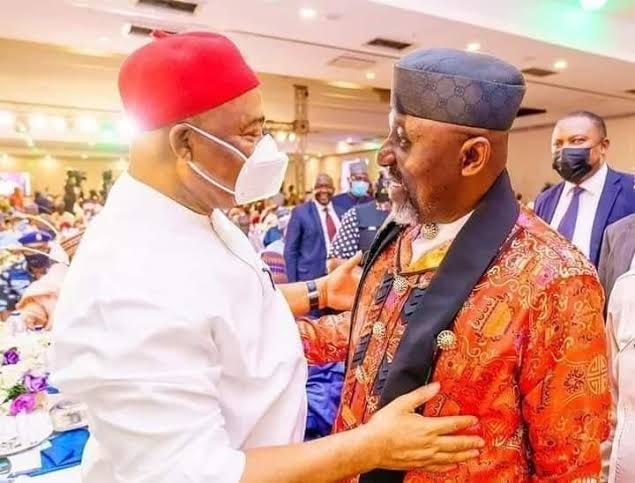
A coalition of Nigerian civil society organisations has urged the judiciary to use the ongoing court case involving Governor Hope Uzodimma and former governor Rochas Okorocha to restore public confidence in the courts. The statement was issued in Bauchi and signed by Job Samuel Danfulani of the Centre for Public Integrity, John Samuel Nangi of Nigeria Integrity Watch, and Mohammed Ibrahim Sumaila of the Northern Council of Nigeria.
The coalition highlighted conflicting accounts of how Uzodimma secured the All Progressives Congress ticket for Imo West. Uzodimma claimed he won through Option A4. The APC’s national leadership told the Federal High Court he emerged through a consensus arrangement. The group described the accounts as conflicting and alleged the process was fraudulent.
The statement cited the 2020 Supreme Court judgment that declared Uzodimma winner of the Imo governorship election, displacing Emeka Ihedioha. That ruling drew widespread criticism. The coalition said the fallout embarrassed the Supreme Court. It also referred to reports that several Nigerian judges were denied US visas.
The group’s intervention comes ahead of the 3 December adjournment in the Kano case and amid the broader litigation surrounding the Imo West Senate ticket. It is a warning. The judiciary has been here before. A ruling that appears politically motivated, or that rests on contradictory evidence, damages the institution more than it damages any single litigant.
This mirrors the pattern of judicial interventions in Nigerian elections since 1999. Courts have removed governors, senators and House members. Some rulings have been celebrated as corrections. Others have been condemned as selections. The difference is rarely the law. It is the appearance of impartiality.
The human stakes are about trust. If voters believe the courts will choose their representatives regardless of how they vote, they disengage. If they believe the courts will apply the law consistently, they participate. The Uzodimma case is a test. The coalition has asked the judiciary to pass it.
Winners and Losers
Winners: The CSOs, which have placed the case in the public domain and framed it as a test of judicial integrity. Okorocha, who benefits from scrutiny of the process that produced Uzodimma’s ticket.
Losers: Uzodimma, whose primary victory is now questioned by a national coalition. The APC, which faces allegations of contradictory submissions. The judiciary, whose credibility is again on the line.
Bottom Line: A court ruling can settle a case. It cannot settle public trust. The judiciary has the Uzodimma case. How it handles it will determine whether Nigerians believe the courts are arbiters or accomplices.