

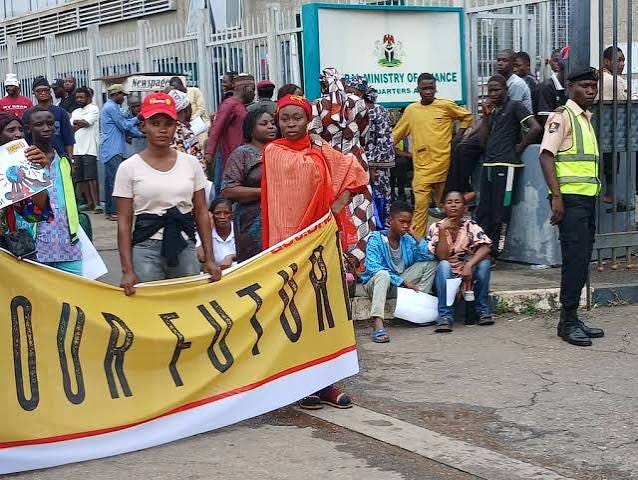
Civil society organisations led by ActionAid Nigeria staged protests on Thursday. They called on international financial institutions to halt unconditional loan disbursements to Nigeria. They cited concerns over the country’s debt service obligations.
Nigeria’s debt stock has grown rapidly. Debt service now consumes a significant share of government revenue. In 2024, the government spent more on debt service than on capital expenditure in some quarters. The World Bank and IMF have continued to approve loans. Each loan adds to the burden. The protesters argue that the loans fund consumption, not development.
The protesters gathered at the Federal Ministry of Finance in Abuja. They included market women, university students and activists. They demanded that the World Bank and IMF stop extending additional loans. They said continued borrowing places a growing burden on Nigerians. “Let Nigeria breathe,” they chanted.
The protest reflects growing public anxiety. Petrol prices are at ₦1,500 per litre. Inflation remains high. Wages are stagnant. The government’s response has been to borrow more. The finance minister, Taiwo Oyedele, has acknowledged the need to reduce dependence on borrowing. He said Nigeria must strengthen domestic revenue generation. That is easier said than done. Tax collection is weak. Oil revenues are volatile.
The protesters’ demand is clear. Stop borrowing. Use existing resources better. The government’s counter is equally clear. Infrastructure and social programmes require funding. Borrowing is necessary until revenues improve. Both positions have merit. The question is which prevails.
Winners: Civil society groups, which amplify their message. International lenders, who continue to earn interest. Losers: Nigerian taxpayers, who service the debt. Future generations, who inherit the obligation. The government, if public anger grows. The poor, who bear the brunt of debt service crowding out social spending.
Bottom Line: The protesters want Nigeria to stop borrowing. The government says it needs the money. The debt service bill says both are right and neither has a solution.