


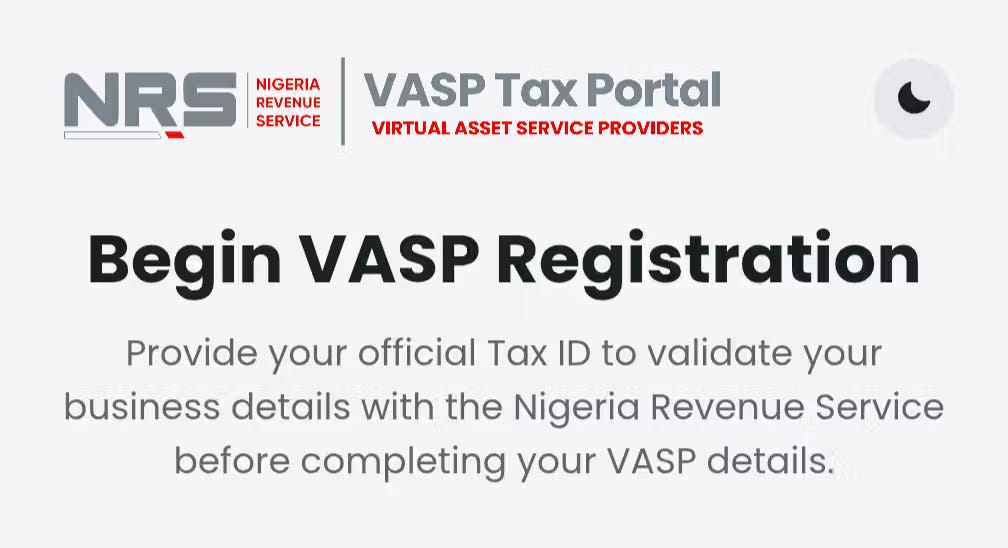
Nigeria is moving to tighten its oversight of the cryptocurrency industry, giving virtual asset service providers until November 30 to register on a new tax compliance portal.
The Nigeria Revenue Service (NRS) and the Joint Revenue Board (JRB) announced the directive in a joint public notice on Friday, November 20. They said affected operators must also complete their integration with the platform by December 31, 2026.
The registration requirement covers individuals and businesses providing virtual asset services in Nigeria or to Nigerian residents, regardless of whether they maintain a physical office in the country.
This means foreign platforms serving Nigerian customers are also within the scope of the directive.
The agencies listed several activities covered by the requirement. These include exchanging digital assets for conventional currencies or other virtual assets, transferring cryptocurrencies, providing custody services and operating digital asset exchanges or trading platforms.
Payment and settlement services involving virtual assets are also covered. Other activities include issuing and redeeming digital assets, staking, lending and borrowing.
The NRS said the portal was deployed under Section 71 of the Nigeria Tax Administration Act, 2025, which provides for the use of technology to automate tax administration.
It will help the revenue authorities administer existing tax obligations arising from virtual asset activities. It will also support registration for anti-money laundering, counter-terrorist financing and counter-proliferation financing requirements under the Financial Action Task Force’s Recommendation 15.
But does this mean cryptocurrency operators are facing another round of taxes?
The agencies insist that it does not. They clarified that the portal neither introduces new taxes nor creates additional tax obligations. Instead, it provides a digital framework for administering responsibilities already established under Nigerian law.
That distinction matters in an industry where regulatory uncertainty and compliance costs can influence whether businesses continue operating locally or serve Nigerian customers from abroad.
The directive also separates tax registration from operating approval. Completing registration on the portal does not automatically grant a company permission to provide virtual asset services. Operators must still obtain any separate licences or authorisations required by the relevant regulators.
The immediate winners are the revenue authorities, which gain another channel to identify operators and administer taxes in a market that has expanded beyond conventional banking channels. Compliant businesses may also benefit from clearer reporting requirements and a more formal regulatory framework.
The losers could be operators that have not prepared for the new requirements. Foreign platforms serving Nigerians may also face additional compliance work, even without a physical presence in the country.
With the first deadline just days away, affected businesses have little time to clarify their obligations and complete registration. Failure to meet the stipulated timelines could attract penalties and other enforcement measures under relevant laws.
Bottom Line: Nigeria is not introducing a new cryptocurrency tax through this portal. It is strengthening its ability to identify, monitor and tax activities that already fall within the law. The real test will be whether the new system improves compliance without driving legitimate digital asset businesses away.