


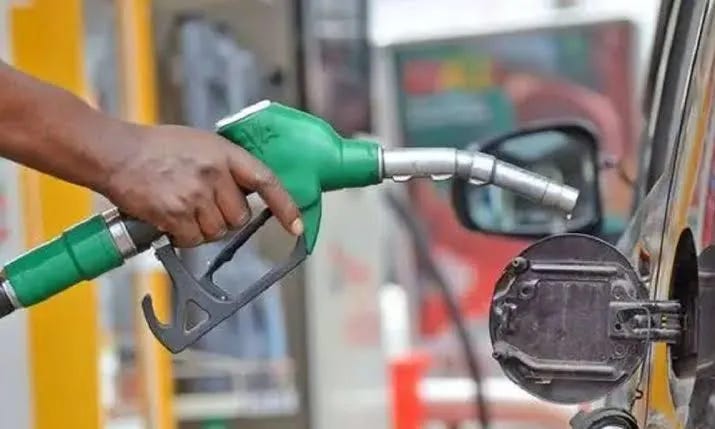
International crude benchmarks have climbed past $100 per barrel. Independent petroleum marketers have adjusted domestic pump prices in response. The move raises operational costs for logistics firms and stretches household budgets further.
Nigeria’s pump prices have tracked global crude since the subsidy was removed in May 2023. In 2022, when Brent crossed $120 after Russia’s invasion of Ukraine, the subsidy absorbed the shock. The treasury paid the difference. That buffer is gone. Every dollar on the crude price now flows to the pump, with exchange rate movements amplifying the effect. In June 2023, the naira float and subsidy removal hit at the same time. Pump prices jumped from about ₦185 to over ₦500 per litre. The current escalation is the second wave.
The trigger is external. Middle East tensions and supply concerns have pushed benchmarks above $100. The CPPE has drawn a meaningful distinction. Petrol sold for about ₦774 to ₦800 per litre before the recent spike. Prices then rose above ₦1,300 per litre. Part of that is subsidy removal. Part is the global commodity shock. The two require different policy responses. The government can control the first. It cannot control the second.
For marketers, the adjustment is defensive. Import costs are dollar-denominated. The naira has not strengthened. Every cargo lands at a higher price. Retailers pass the cost to consumers because margins are thin. For transport operators, diesel and petrol costs drive fares. A 10% pump price increase translates into a 5% to 8% fare increase within weeks. For households, the effect compounds. Food prices rise because logistics costs rise. Generator fuel costs rise. School run costs rise.
The CPPE estimates that restoring a universal subsidy at this price level would cost about ₦152.5 billion daily and roughly ₦19.16 trillion annually. That is the fiscal alternative. It is not viable.
Winners: Domestic refiners, whose margins improve when import parity rises. Oil marketers with hedged positions. The Federal Government, which avoids a new subsidy bill. Losers: Households, who face higher transport and food costs. Transport operators, who lose margin or pass costs to riders. Small businesses, which depend on diesel for generators. The naira, which weakens further as import demand for fuel rises.
Bottom Line: Crude at $100 is not Nigeria’s decision. The pump price is. The government can absorb the shock or pass it on. It has chosen to pass it on.