


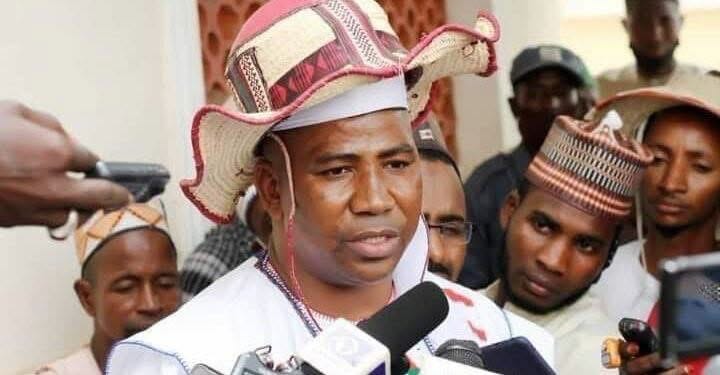
The Federal High Court in Abuja has declined to hear an application by Bello Bodejo, president of Miyetti Allah Kauta Kore, seeking a reduction of the conditions attached to his ₦2 billion bail. Justice Inyang Ekwo, in a ruling on Thursday, said the court may not have enough time to determine the application before the commencement of its annual vacation, especially as the Economic and Financial Crimes Commission (EFCC) is opposing the request. The judge advised both parties to approach a vacation judge to hear the application during the court’s break.
Justice Ekwo had on Monday granted Bodejo bail of ₦2 billion, requiring two sureties of the same amount. One surety must provide evidence of three years’ tax clearance and reside within the court’s jurisdiction, while the other must own land in Abuja valued at ₦2 billion. At Thursday’s proceedings, Bodejo’s lawyer, Mohammed Sheriff, informed the court of his client’s application seeking changes to the bail conditions, which he described as difficult to meet.
The EFCC is prosecuting Bodejo over alleged money laundering involving $2.63 million. The EFCC alleged that Bodejo received $100,000 from Sa’idu Abubakar, a former Accountant-General of Bauchi State currently in police custody, among other cash transactions. According to the commission, the payment exceeded the ₦5 million cash transaction limit allowed under Nigeria’s money laundering laws and was not processed through a financial institution as required. The EFCC said the alleged offence violates provisions of the Money Laundering (Prohibition) Act 2011, as amended, and the Money Laundering (Prevention and Prohibition) Act 2022. Justice Ekwo adjourned the case until 5 October for the commencement of trial.
The case is a test of Nigeria’s anti-money laundering laws and the independence of the judiciary. The bail conditions are stringent, reflecting the seriousness of the charges. Bodejo’s inability to meet them raises questions about the fairness of the judicial process.
This echoes the 2019 bail dispute involving a former governor, where the court also imposed stringent conditions that the defendant struggled to meet. The mechanism then was different, but the result was the same: a legal battle over bail that delayed the trial.
The winners: the EFCC, which has successfully opposed the application; and the Nigerian judicial system, which has maintained the integrity of the bail conditions. The losers: Bodejo, who remains in custody; and the Nigerian public, who must wait for the trial to commence.
Bottom Line: A court has stalled a bid to ease ₦2 billion bail conditions. The EFCC is opposing the request. The trial begins in October. The defendant remains in custody.