


The Chief Judge of the Federal High Court, John Tsoho, has issued new guidelines for the hearing of pre-election cases. The rules introduce stricter timelines for filing and hearing suits while directing court registries nationwide to remain open on weekends and public holidays to receive pre-election filings.
The Federal High Court (Pre-Election) Practice Directions, signed by Mr Tsoho on 26 June, took effect on 29 June. They repeal the 2022 version and were issued pursuant to Sections 254 and 285 of the 1999 Constitution, as well as Sections 29(5) and 88(2) of the Electoral Act, 2026.
A major feature is the directive that registries in all Federal High Court judicial divisions must remain open on Saturdays, Sundays and public holidays between 10 am and 2 pm exclusively for the filing of pre-election matters. “In cognisance of Pre-Election cases being time-sensitive in nature, the Registry of this Honourable Court in all the Judicial Divisions in the Federation shall be open on Saturdays, Sundays and Public Holidays, between the hours of 10 AM and 2 PM exclusively for the filing of Pre-Election matters,” the Practice Directions stated. The directive underscores the court’s effort to ensure that constitutional timelines for determining pre-election disputes are not undermined by delays in filing.
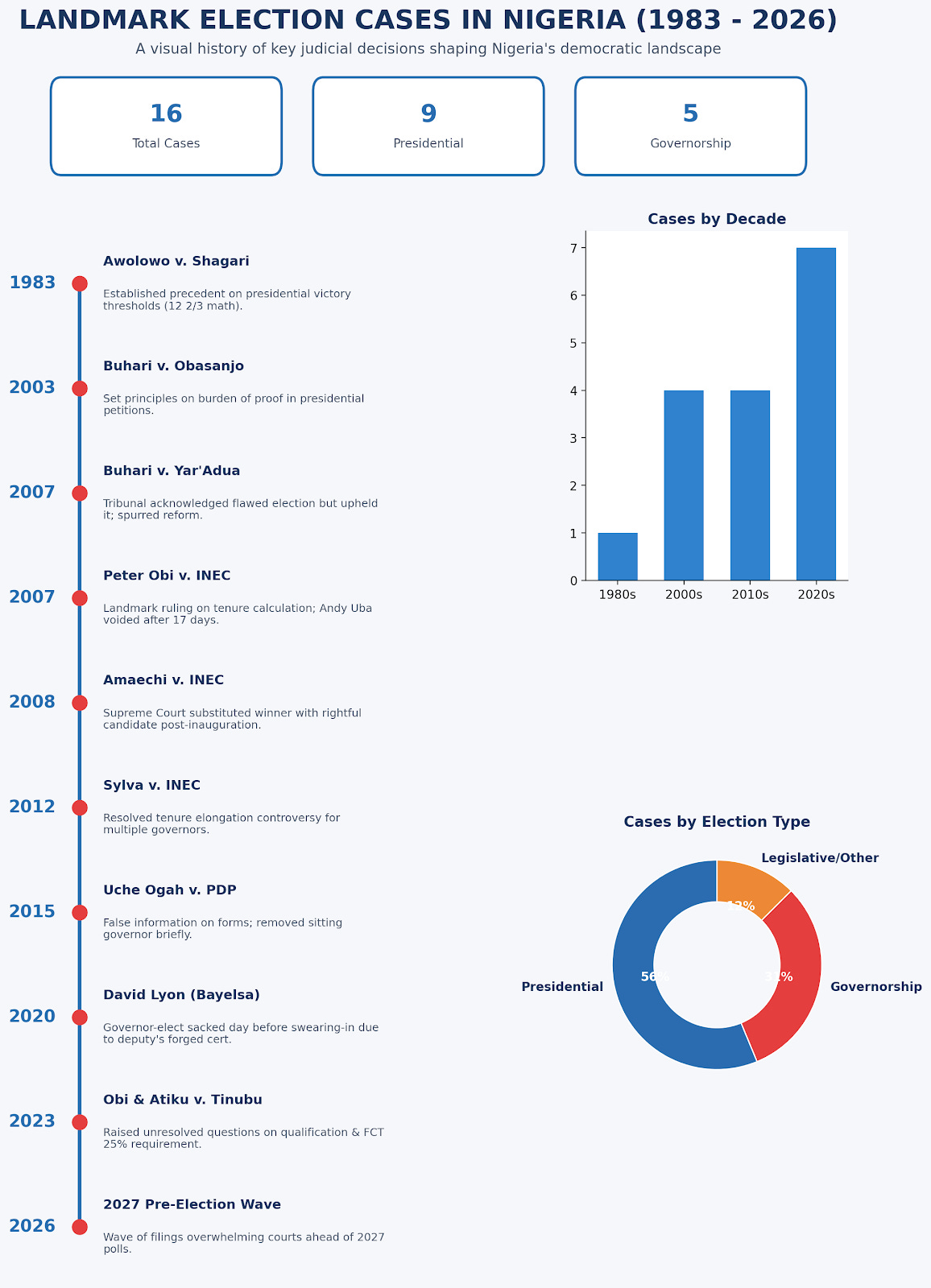
The new rules also make it mandatory for all pre-election cases to be commenced by originating summons, a kind of suit that relies on affidavit evidence instead of calling witnesses to testify in open court. Originating summonses are usually deployed in cases where the facts are largely undisputed and the court only needs to rule on compliance with rules and laws. However, where a case involves allegations of fraud, forgery or other highly contentious facts, parties are required to set out detailed particulars. The court may hear oral evidence from witnesses or receive documentary evidence to resolve disputed issues.
Applicants must file, alongside the originating summons, an affidavit setting out the facts, copies of all exhibits, a written address and an affidavit confirming that no similar action has been filed on the same subject matter. Respondents must enter an appearance within seven days of being served and file their counter-affidavit and written address within 10 days. Applicants may file a reply within three days after receiving the respondent’s processes. Written addresses must be typed in double spacing, use a 12-point font and not exceed 15 pages.
The guidelines also require anyone challenging the conduct or outcome of a party primary to join all necessary parties to the suit.
The winners: litigants who benefit from faster resolution of pre-election disputes, and the court system which now has clearer rules. The losers: parties who might have benefited from delays, and lawyers who must now work weekends to meet filing deadlines.
Bottom Line: The court is preparing for the 2027 elections by making pre-election litigation faster. The question is whether the speed will compromise the quality of justice.