


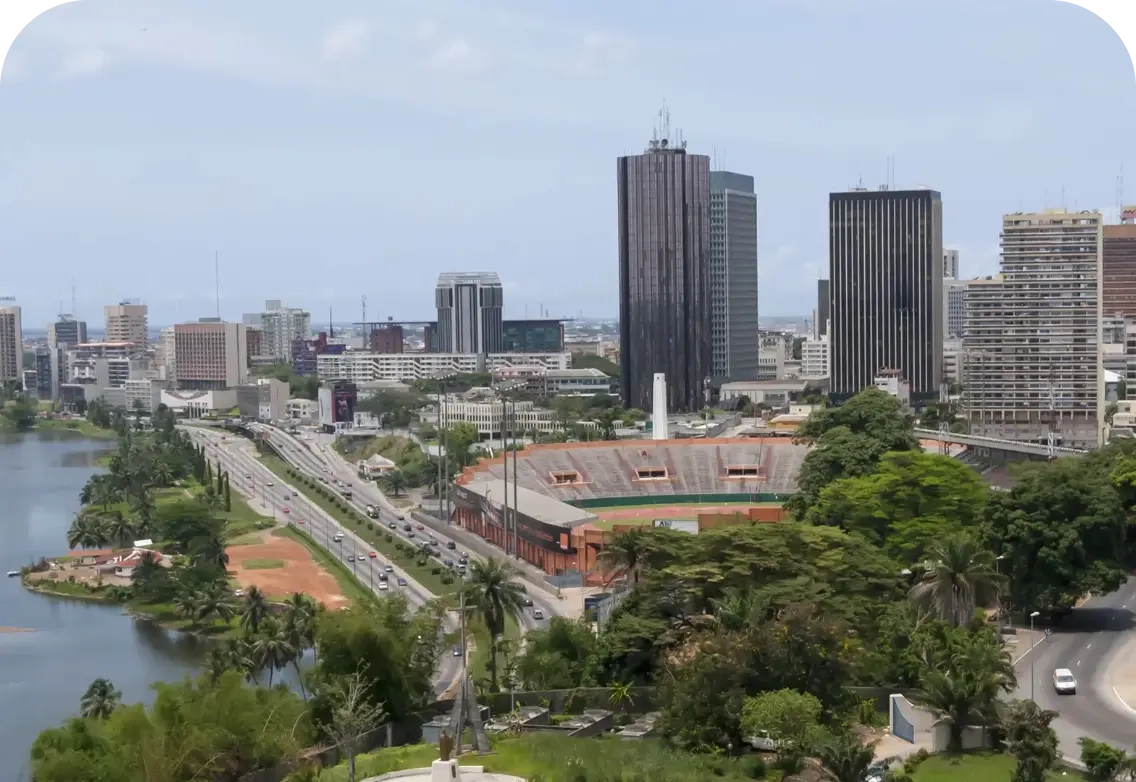
Côte d’Ivoire has launched the Advisory Group for Financing its 2026–2030 National Development Plan (NDP), seeking to mobilise resources for projects valued at 114.8 trillion CFA francs ($18.7 billion). The initiative, launched in Abidjan, aims to secure support from international financial institutions, development partners and private investors, with the private sector expected to provide nearly 70 percent of the funding.
Representing President Alassane Ouattara, Vice President Tiémoko Meyliet Koné said the strong participation of partners reflected confidence in the country’s economic prospects. He said the plan forms part of Côte d’Ivoire’s Vision 2030 strategy to attain upper-middle-income status.
Koné highlighted the country’s economic progress under the 2021–2025 development plan, including average annual growth of 6.5 percent, a budget deficit reduced to 3 percent in 2025, controlled inflation and improved debt sustainability, despite global economic challenges. The country is currently the only one in sub-Saharan Africa to hold a “low” risk of debt distress rating from the IMF and World Bank.
The Nigerian stake is direct. Côte d’Ivoire is Nigeria’s competitor for investment in West Africa. The country is positioning itself as a regional economic hub, and its success in attracting financing could draw investment away from Nigeria. Nigerian businesses operating in Côte d’Ivoire may benefit, but Nigerian businesses at home may face increased competition for capital.
From a Nigerian vantage point, the Ivorian plan is a model and a warning. The model: a clear development strategy with strong international support. The warning: Nigeria’s own development planning is less coherent. If Côte d’Ivoire succeeds, it could become the preferred investment destination in the region.
This mirrors the 2010s, when Ghana was the IMF’s poster child for economic reform while Nigeria struggled with its own fiscal challenges. The pattern is repeating. Côte d’Ivoire is the new star. Nigeria is still trying to find its footing.
The winners: Côte d’Ivoire, which is building a clear development plan. The losers: Nigeria, which risks losing the competition for investment to its West African neighbour.
Bottom Line: Côte d’Ivoire is asking for $18.7 billion to fund its development plan. Nigeria is still trying to figure out where 2 percent of its GDP went.