


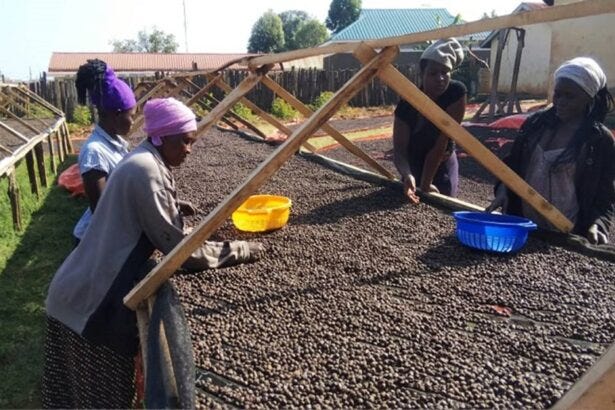
Côte d’Ivoire has launched an interim programme to boost its oil palm and coconut sectors as part of a broader strategy to strengthen agricultural production and local processing. Speaking at the launch in Grand-Béréby, Agriculture Minister Bruno Nabagné Koné said the government is finalising a national oil palm development strategy backed by 1.077 trillion CFA francs in funding.
The plan aims to improve access to fertilisers, certified seedlings and credit, modernise industrial production and expand the country’s share of the regional edible oil market. Chairman of the Rubber, Oil Palm and Coconut Council, Félix Anoblé Miézan, urged nurserymen to produce certified seedlings and called on industrialists to invest more in local processing to create jobs and add value.
The interim programme includes the distribution of subsidised fertilisers, certified seedlings and the rehabilitation of farm roads. Beneficiaries welcomed the initiative, saying it would help improve productivity and farmers’ incomes. The programme is a significant investment in Côte d’Ivoire’s agricultural sector, which is a key driver of the economy.
The Nigerian stake is clear. Nigeria is also a major producer of oil palm, and the Ivorian programme is a reminder that the country faces competition from its West African neighbour. If Côte d’Ivoire succeeds in boosting its oil palm and coconut sectors, it could capture a larger share of the regional edible oil market, displacing Nigerian producers.
From a Nigerian vantage point, the Ivorian programme is a model and a warning. The model: a government investing in agricultural development with a clear strategy and significant funding. The warning: Nigeria’s own agricultural investment has been limited, and the country risks falling behind its competitors.
This echoes the 2010s agricultural investment programmes in Côte d’Ivoire, which also sought to boost production and processing. The mechanism then was different, but the result was the same: a focus on agricultural development.
The winners: Ivorian farmers, who will benefit from subsidised inputs and improved infrastructure; and the Ivorian economy, which gains from increased agricultural production and processing. The losers: Nigeria, which faces increased competition; and the Nigerian government, which must invest in its own agricultural sector.
Bottom Line: Côte d’Ivoire is investing in its oil palm and coconut sectors. The goal is to boost production and processing. The question is whether Nigeria will follow suit or fall further behind.