


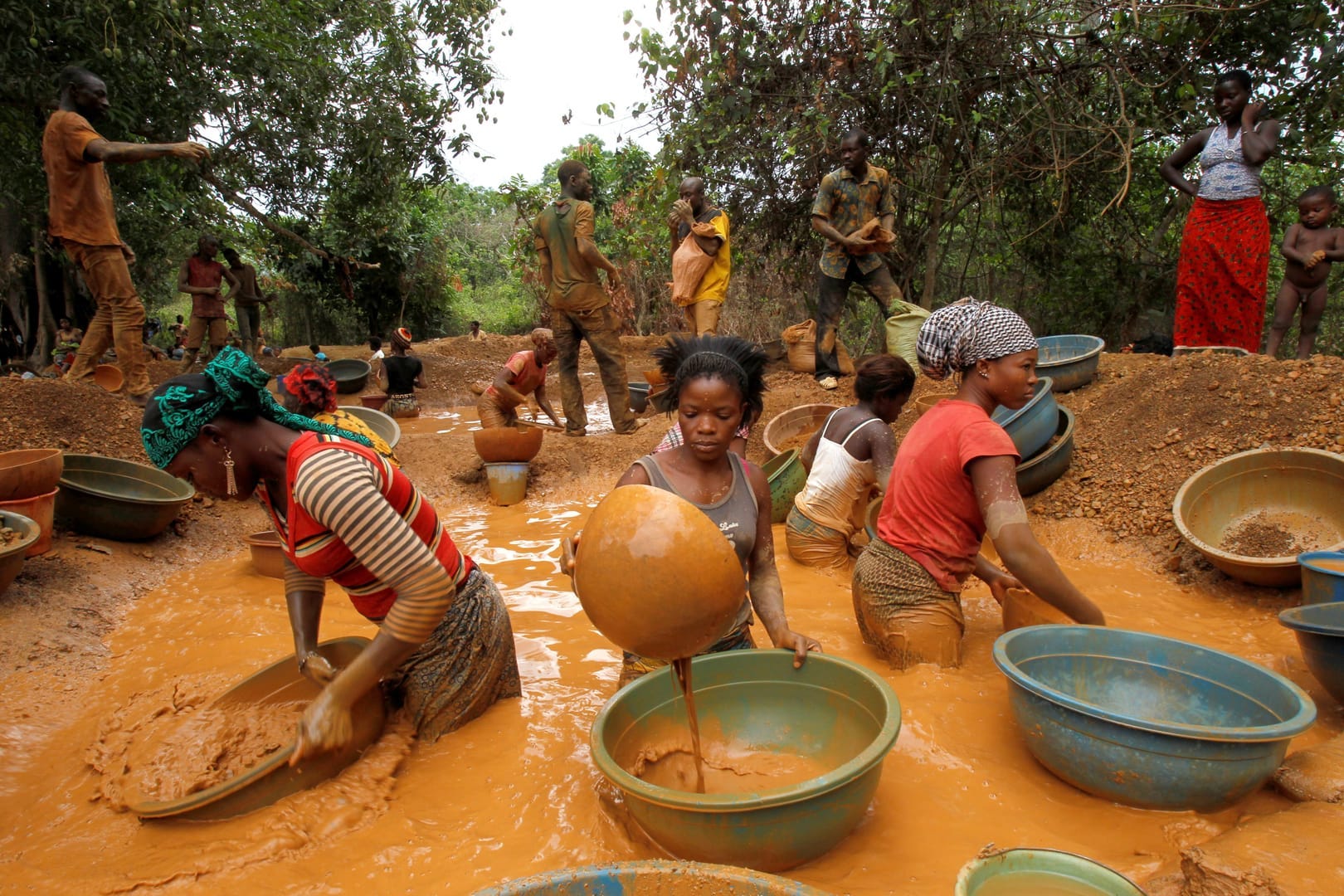
The Union of Gold and Diamond Buyers and Sellers of Côte d’Ivoire (SAVOD-CI) has expanded its national presence with the inauguration of new representatives in the Autonomous District of Yamoussoukro, extending its operations to seven of the country’s 13 districts, covering about 54 percent of the national territory.
The investiture ceremony brought together officials from the Ministry of Mines and Geology, security agencies, local authorities, traditional leaders and stakeholders in the mining sector. Keita Drissa was appointed district delegate for Yamoussoukro, while Koné Mohamed and Diabaté Djibril were named delegates for Attiégouakro and Kossou, respectively.
SAVOD-CI President Brahima Soumahoro said the new representatives would promote gold traceability, strengthen collaboration with authorities and support efforts to curb illegal gold mining. He urged the delegates to prioritise national interests and report illegal activities in the mining sector. The union plans to expand into the Lake District next, increasing its coverage to more than 60 percent of Côte d’Ivoire.
The Nigerian stake is clear. Côte d’Ivoire is Nigeria’s competitor in the West African mining sector. The country is positioning itself as a regional hub for gold and diamond trading, and its success in regulating the sector could draw investment away from Nigeria. Nigerian mining companies operating in Côte d’Ivoire may benefit, but those at home may face increased competition.
From a Nigerian vantage point, the Ivorian union expansion is a model and a warning. The model: a structured approach to regulating artisanal mining. The warning: Nigeria’s own mining sector remains largely unregulated, with illegal mining fuelling insecurity and depriving the government of revenue.
This mirrors the 2010s mining sector reforms in Ghana, which sought to formalise artisanal mining and reduce illegal activity. The mechanism then was different, but the result was the same: a more regulated sector, greater government revenue and reduced conflict.
The winners: Côte d’Ivoire, which is building a regulated mining sector; and the union, which is expanding its influence. The losers: Nigeria, which is not keeping pace with its West African neighbour, and illegal miners, who face increased scrutiny.
Bottom Line: Côte d’Ivoire is regulating its gold sector. Nigeria is still trying to figure out who is mining what. The gap is widening.