


Nearly 200 countries have ended the 31st United Nations Climate Change Conference (COP31) without an overarching agreement, after disagreements over fossil fuels and climate finance pushed negotiations into a second day of overtime.
The 12-day summit, held in Antalya, Turkey, was scheduled to close on Friday, November 20. However, negotiations continued until Sunday, November 22, making it the longest United Nations climate conference on record.
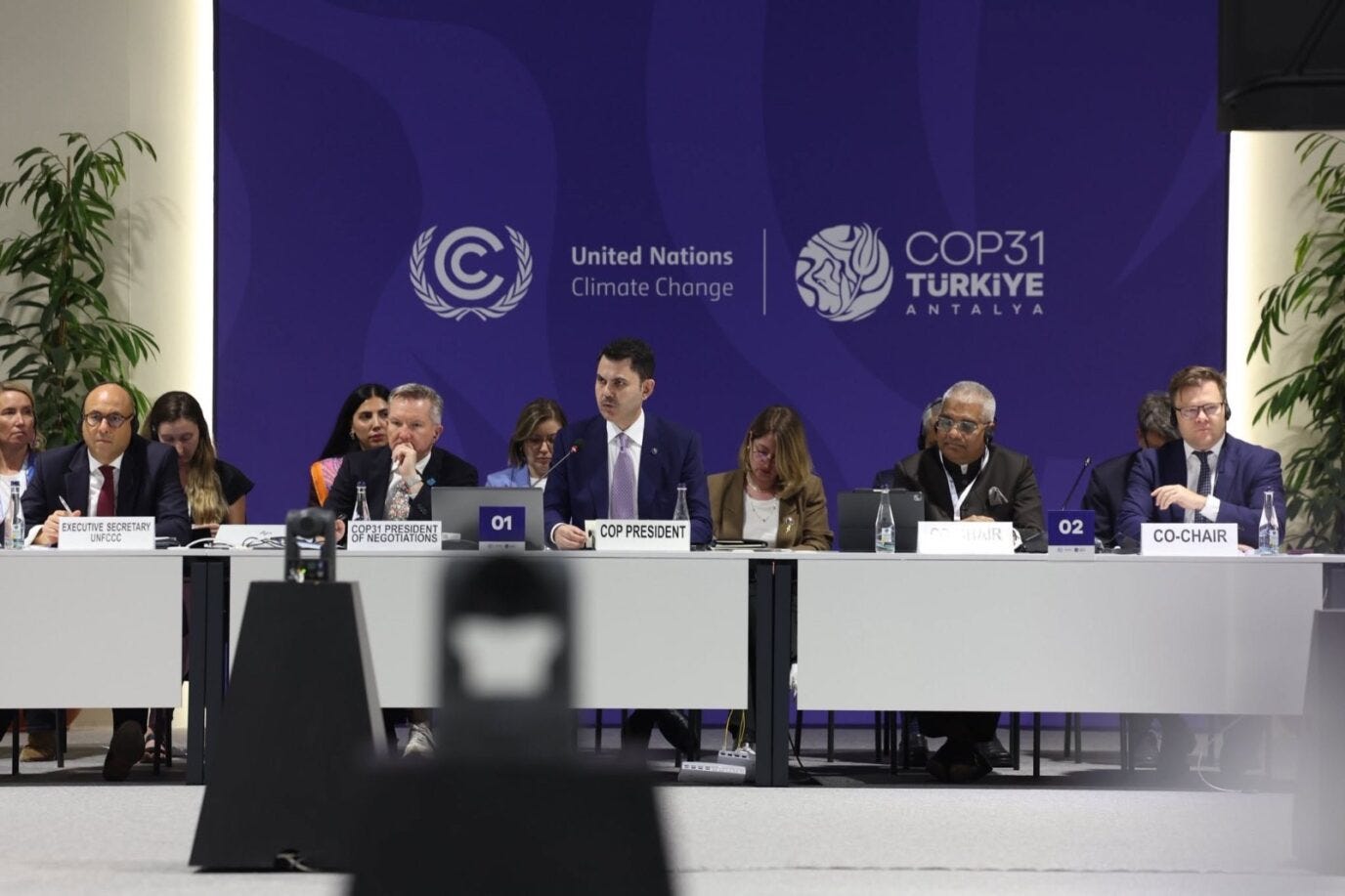
Murat Kurum, COP31 president, confirmed during the closing plenary that countries had failed to agree on the final draft. The conference therefore ended without adopting a common political declaration, known as the cover decision.
FOSSIL FUELS DIVIDE COUNTRIES
The biggest disagreement concerned whether countries should explicitly commit to moving away from coal, oil and gas.
The first draft of the proposed agreement included language calling for accelerated action to phase out fossil fuels. But subsequent versions removed the direct reference, leaving only an indirect reference to the commitment reached at COP28 in Dubai in 2023.
At that conference, countries agreed to transition away from fossil fuels in energy systems in a just, orderly and equitable manner.
The European Union rejected the latest draft, arguing that it failed to reflect the urgency of the climate crisis. Ireland’s environment minister, Darragh O’Brien, speaking for the bloc, said it could not endorse an agreement that did not mention fossil fuels.
Norway, Panama, the Marshall Islands and other countries also objected.
AFRICA’S FINANCIAL CONCERNS
The disagreement extended beyond fossil fuels. African countries and other developing economies wanted stronger commitments from wealthy nations to finance climate adaptation.
An earlier proposal included a target of $120 billion in annual adaptation finance, but this was removed from subsequent drafts.
Ghana, representing the African Group of Negotiators, expressed dissatisfaction with the negotiations and the treatment of Africa’s priorities. The group nevertheless indicated that it would allow the text to proceed in the interest of multilateral cooperation.
United Nations Secretary-General António Guterres said he was deeply disappointed by the absence of consensus, warning that greenhouse gas emissions remained too high and global temperatures continued to rise.
For Nigeria, the deadlock exposes a difficult balance. The country depends heavily on oil and gas revenue but also faces flooding, erosion, desertification and other climate-related threats. It needs investment to diversify its energy sources while securing funding to protect vulnerable communities.
The immediate beneficiaries are countries reluctant to accept stronger fossil fuel commitments. However, climate-vulnerable nations, including Nigeria, risk losing momentum on adaptation finance. The wider international community also loses an opportunity to strengthen cooperation on emissions reduction.
Bottom Line: COP31 has exposed the gap between countries’ climate promises and their willingness to act collectively. For Africa, the concern is not simply whether the world will reduce fossil fuel use, but whether wealthy nations will provide the funding needed to help vulnerable economies survive the consequences of climate change.