


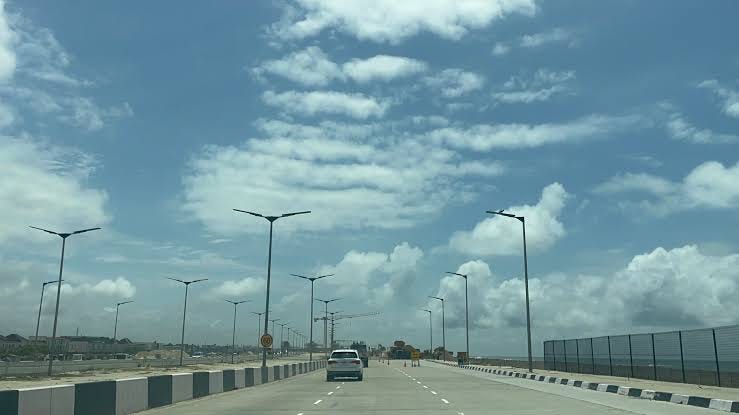
The Federal Government has rerouted sections of the Lagos-Calabar Coastal Highway. The new route follows the existing East-West Road from Ondo into Edo State. President Bola Tinubu directed the change. The Minister of Works, Dave Umahi, disclosed the directive. The decision has raised questions about procurement, engineering assessments and environmental reviews.
The Lagos-Calabar Coastal Highway is a flagship project. It began in March 2024. It is 700 kilometres long. It will cost an estimated ₦15 trillion. It is designed to connect coastal communities from Lagos through the South-West and South-South. It aims to support marine logistics, tourism, real estate and economic activity. The original route faced engineering challenges. The terrain was difficult. The soil was unsuitable. The government said the reroute avoids these problems.
Umahi said the original alignment crossed pits more than 100 metres deep. Suitable sharp sand was unavailable at depths of up to 300 metres. “We had to take a very serious engineering decision by making a detour, redesigning it to avoid such route,” he said. The Ondo-Edo corridor includes a 45-kilometre Benin bypass to ease congestion. It measures 104 kilometres.
The reroute has caused fresh scrutiny. Questions remain about whether sufficient feasibility studies were conducted before construction. The procurement process may not have assessed the project’s technical challenges. The Environmental Impact Assessment Act requires environmental effects to be assessed before work begins. It also requires public display of draft reports for at least 21 working days. The Federal Ministry of Environment published draft reports for the first two Lagos sections in 2024. The contractor’s summary states approval was issued on 8 November 2024. Construction had begun earlier that year.
The Ilaje Omuro Community Connect represents coastal communities. It said the realignment could deny the Ilaje people access to economic benefits. “The issue at stake is not merely the construction of a road; it is a question of fairness, economic inclusion, environmental protection and the right of the Ilaje people to benefit equitably from a major national development project,” the group said.
Atiku Abubakar has challenged the reroute. The former Vice President and ADC presidential candidate asked the government to publish contract documents and payment records. He raised concerns over reports that the Presidency is pressuring the National Assembly to approve a fresh $20 billion loan linked to the project. He alleged that lawmakers are being threatened with the withholding of campaign funds unless they approve the loan. He questioned the route changes and the original contract costs.
Winners: The Federal Government, which adjusts to engineering realities. Contractors, who may gain from redesigned works. Communities on the new route, which gain access. The Benin bypass, which eases congestion. Losers: The Ilaje community, which loses expected access. Taxpayers, if the project is mismanaged. The National Assembly, which faces pressure. Atiku, if his challenges are dismissed. The procurement process, whose integrity is questioned.
Bottom Line: The coastal highway has been rerouted. The government cites engineering challenges. Critics cite procurement failures. The Ilaje community says it is excluded. Atiku demands transparency. A $20 billion loan hangs in the balance. The project must proceed. But it must proceed transparently. Nigeria cannot afford another white elephant.