


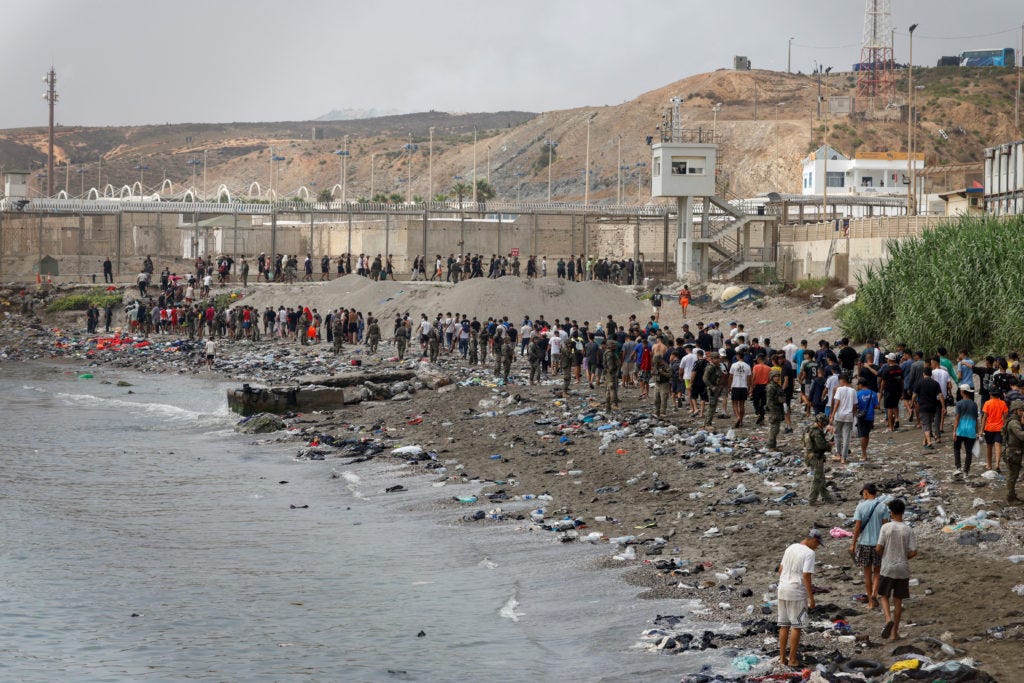
Residents of Ceuta are angry after an unprecedented border crisis saw up to 60,000 migrants flood from Morocco into the tiny Spanish enclave within a 24-hour period. The border has since been reinforced, with tens of thousands of migrants reportedly returning to Morocco voluntarily. But shops were closed and bread was in short supply as the North African territory struggled on Friday to cope with the influx.
Shuttered storefronts lined Calle Real, Ceuta’s main commercial artery, where the usual flow of shoppers and residents was replaced by scores of migrants milling around. “This cannot be allowed. I’m not against immigration, but I believe it has to be regulated immigration, and this isn’t regulated,” said resident Lidia. “We can’t go about our daily lives. We can’t live our lives, we can’t do absolutely anything, and we’re at our wits’ end because nobody is helping us.”
The influx triggered a political crisis in Madrid with the army mobilised and Prime Minister Pedro Sánchez calling it “a violation of Spain’s territorial integrity.” Some Moroccans who crossed into Ceuta said they had hoped to find better work opportunities in Spain but were returning because of the mayhem in the enclave. On Friday evening, officials said at least 57 people had died in the rush on the Spanish side of the border.
The Nigerian stake is clear. The Ceuta crisis is a stark reminder of the migration pressures facing North Africa and Europe. Nigeria is a major source of migrants seeking to reach Europe, and the conditions that drive migration, including poverty, unemployment and insecurity, are also present in Nigeria. The Ceuta crisis could lead to tighter migration controls across the Mediterranean, affecting Nigerian migrants.
From a Nigerian vantage point, the Ceuta crisis is a warning. The migration route to Europe is becoming more dangerous and more difficult. The Nigerian government must address the root causes of migration, including economic opportunity and security, to reduce the pressure on its citizens to leave.
This echoes the 2020 Ceuta migration crisis, when thousands of migrants also crossed from Morocco. The mechanism then was different, but the result was the same: a border crisis that exposed the fragility of Europe’s migration system.
The winners: none. The losers: the migrants who crossed and were forced to return; the residents of Ceuta, who have seen their city overwhelmed; and the Nigerian government, which must address the root causes of migration.
Bottom Line: Ceuta is overwhelmed after 60,000 migrants crossed from Morocco. The border is reinforced. The crisis is a reminder of the migration pressures facing Africa and Europe. Nigeria is watching.