


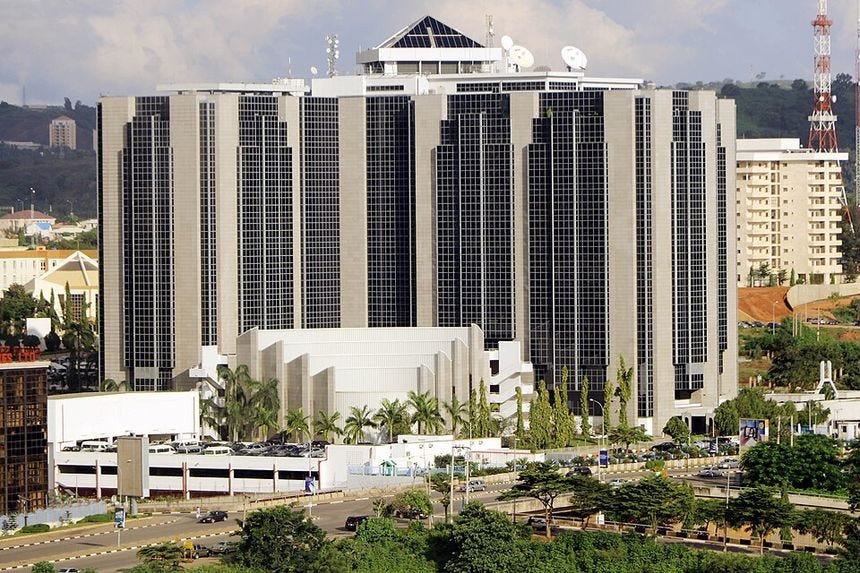
The Central Bank of Nigeria (CBN) has retained its benchmark interest rate at 23 per cent, choosing to maintain tight monetary conditions despite the recent decline in inflation.
Governor Olayemi Cardoso announced the decision on Tuesday, 24 November, after the Monetary Policy Committee (MPC) concluded its 308th meeting in Abuja. Ten members attended the two-day meeting.
The committee also retained the asymmetric corridor around the Monetary Policy Rate (MPR) at +50 and -300 basis points. It kept the Cash Reserve Requirement (CRR) at 45 per cent for commercial banks, 16 per cent for merchant banks and 75 per cent for non-Treasury Single Account public-sector deposits.
The decision follows the September reduction of the benchmark rate from 26.5 per cent to 23 per cent. That 350-basis-point cut was the first major reduction after several months of restrictive monetary policy.
The CBN is now holding the rate to protect the progress made against inflation. Headline inflation declined to 14.06 per cent in October from 14.63 per cent in September. Core inflation fell to 10.78 per cent, while food inflation eased to 19.13 per cent. These figures suggest that price pressures are moderating, although food inflation remains considerably higher than the headline rate.
Cardoso said the committee was concerned that several developments could reverse the improvement. These include increased spending during the festive season, election-related expenditure, disruptions to global energy supplies and adverse weather conditions that could affect food production.
The election concern is particularly important. As political spending increases ahead of the 2027 general election, additional money entering the economy could raise demand and put pressure on prices. The CBN wants to prevent that spending from weakening its anti-inflation efforts.
The bank also reported that Nigeria’s gross external reserves stood at $54.02 billion as of 17 November, providing approximately 10.26 months of import cover. It attributed the recent moderation in inflation partly to exchange-rate stability and improved monetary policy transmission.
For businesses and households, however, retaining the rate means borrowing costs are unlikely to fall significantly in the immediate future. Manufacturers, small businesses and individuals seeking bank loans will continue to face expensive credit. Banks must also keep a substantial share of deposits with the CBN under the existing reserve requirements.
The winners are savers and investors who benefit from relatively high interest rates, as well as the CBN if its restrictive policy continues to reduce inflation. Borrowers, manufacturers and small businesses remain under pressure because expensive credit can discourage expansion and investment. Households may benefit from slower price increases, but lower inflation does not mean that prices have returned to previous levels.
The challenge for the CBN is to balance price stability with economic growth. Keeping rates high for too long could restrict productive investment, while cutting them too early could revive inflationary pressures. The bank must therefore demonstrate that its policy can bring down prices without unnecessarily weakening economic activity.
Bottom Line: The CBN is protecting its inflation gains, but Nigerians will need to see lower borrowing costs and sustained relief in the cost of living.