


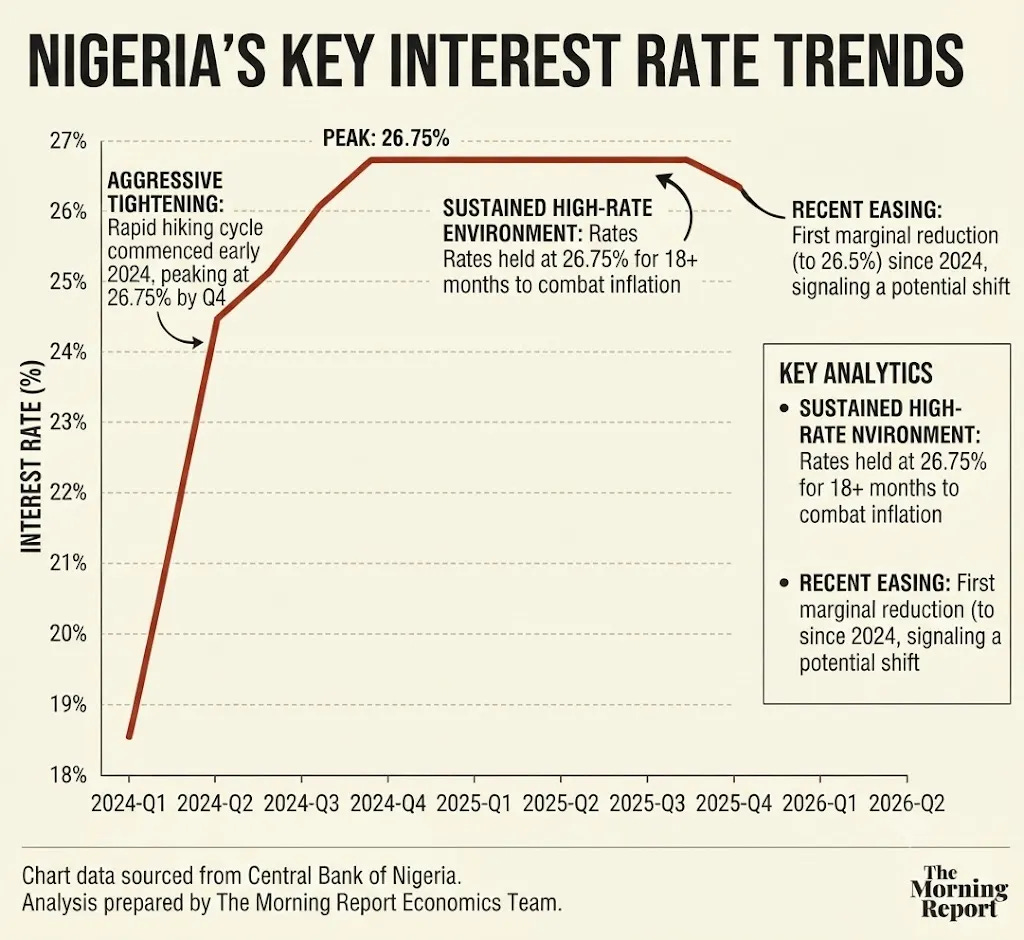
The CBN governor’s message on Thursday was clear: don’t expect rate cuts just yet. Speaking at the BusinessDay conference, Cardoso acknowledged 11 months of continuous disinflation but cited geopolitical shocks as a reason for caution. “We had projected that going into next year inflation would have been down to very moderate levels,” he said, “if not for the fact that we had this”. The “this” refers to conflict involving Iran — a reminder that Nigeria’s monetary policy is hostage to global events beyond its control.
The Monetary Policy Committee meets on 20-21 July. Market expectations of a pivot were high, but Cardoso poured cold water on them. “We didn’t cut, and believe me, we saw things that most other people didn’t see”. The data-dependent approach is sound monetary policy. But for Nigerian businesses that have been borrowing at double-digit rates, sound policy is cold comfort.
The naira is also under pressure. Dangote Refinery’s decision to price local fuel sales in dollars has boosted demand for hard currency. The naira traded at 1,383 on the official market on Thursday, slightly weaker than 1,379 a week earlier, while street trading saw 1,425 to the dollar. “We have seen the naira depreciate this week,” one trader said. “I expect the pressure to continue unless events change in the global space to improve risk appetite”. This is the paradox of reform: the policies that restored reserve stability are now contributing to currency pressure.
Cardoso credited the early implementation of reforms for helping Nigeria withstand global shocks. “We had resilience, and we were able to withstand the shocks”. The resilience is real, but so is the pain. For a business owner in Lagos, high interest rates and a volatile naira are not abstract policy variables; they are the difference between expansion and bankruptcy. For a family in Kano, they determine whether the month’s earnings cover the month’s expenses. The CBN’s caution is understandable. But understanding does not pay the bills.
Winners: The CBN, savers earning high interest rates, and foreign investors.
Losers: Businesses reliant on credit, importers, families struggling with the cost of living.
Bottom Line: Cardoso is right to be cautious, but caution has a cost — and Nigerian households and businesses are paying it.