


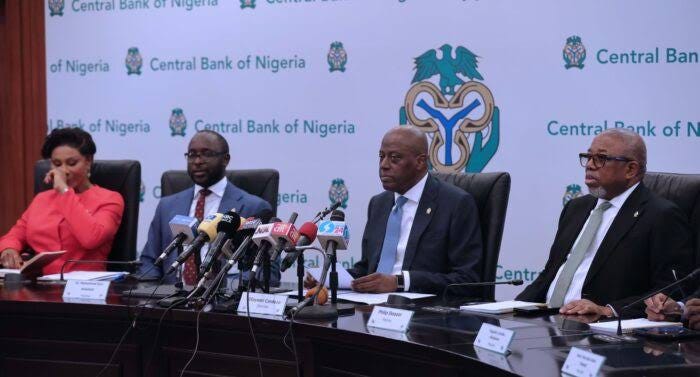
The Central Bank of Nigeria (CBN) has cut the Monetary Policy Rate (MPR) by 350 basis points. The rate now stands at 23%, down from 26.5%. Governor Olayemi Cardoso announced the decision after the 307th Monetary Policy Committee meeting in Abuja. He described the adjustment as an operational recalibration. The trigger was three consecutive months of declining headline inflation and foreign exchange stability.
The CBN raised rates aggressively through 2024 and 2025. The MPR peaked at 27.5% in 2024. The goal was to curb inflation, which had reached 33.2%. High rates attracted portfolio inflows but also made borrowing expensive. Businesses complained. Manufacturers warned of layoffs. The CBN held rates high through early 2026. Inflation began falling. Food inflation remained sticky. The bank faced pressure to ease. It resisted until now.
The 350-basis-point cut is significant. It signals a shift from tightening to easing. Cardoso said the decision was enabled by declining inflation and FX stability. Headline inflation fell to 15.39% in August. The naira has strengthened since the J.P. Morgan and FTSE reclassifications. Reserves have improved. The CBN believes the trajectory is sustainable. The cut will lower borrowing costs. Banks will adjust their lending rates. Businesses may access cheaper credit. Consumers may see lower interest on loans.
The risks are real. Inflation is still above the CBN’s target. Food inflation remains high at 19.57%. A premature cut could reignite price pressures. The naira’s stability depends on oil prices and portfolio flows. Both are volatile. The CBN must monitor the data. If inflation rises again, it may need to reverse.
The MPC’s decision is a bet. It bets that disinflation is durable. It bets that FX stability holds. If the bet fails, credibility suffers.
Winners: Borrowers, who face lower rates. Businesses, which gain cheaper credit. The CBN, which shows confidence. Bondholders, who gain from capital appreciation. Losers: Savers, who earn lower returns. Fixed-income investors, who face reinvestment risk. The CBN, if inflation rebounds. Consumers, if the cut fuels price pressures. The naira, if outflows resume.
Bottom Line: The CBN cut rates for the first time in two years. Inflation is falling. The naira is stable. The bank is easing. The bet is that the trend holds. If it does not, the CBN will reverse. Policy is data-dependent. The data is improving. The risk is complacency.