


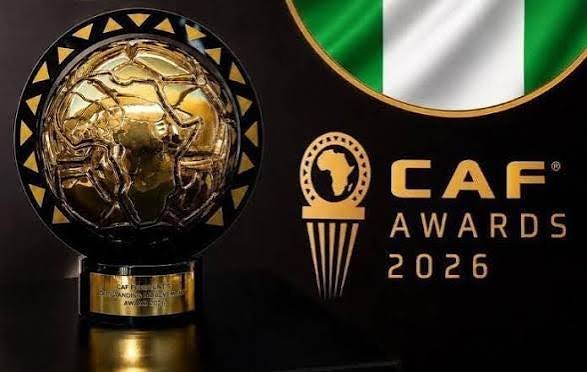
The Confederation of African Football has confirmed that the 2026 CAF Awards will take place in Lagos, Nigeria, on Monday, 7 December 2026. The ceremony will hold at the Wole Soyinka Centre for Culture and Creative Arts, formerly the National Theatre, in Iganmu.
The decision was reached at a virtual meeting of the CAF Executive Committee chaired by President Patrice Motsepe on Friday, 2 October. The EXCO also confirmed that Nigeria will host the CAF Ordinary General Assembly on 21 November. It approved the CAF Competitions Calendar for 2026 to 2030 and amendments to the regulations governing the Champions League and Confederation Cup.
The award categories include Player of the Year, Coach of the Year, Goalkeeper of the Year, Young Player of the Year and Club of the Year, covering both men’s and women’s football.
This mirrors Nigeria’s long relationship with African football leadership. The country hosted the 2025 CAF Awards in Rabat, Morocco, where Morocco dominated. Nigeria’s Chiamaka Nnadozie won Women’s Goalkeeper of the Year. The 2024 ceremony in Marrakech saw Ademola Lookman win Men’s Player of the Year, following Victor Osimhen’s triumph in 2023. They were the first Nigerian pair to secure consecutive victories since Nwankwo Kanu and Victor Ikpeba in 1996 and 1997.
The regulatory changes approved at the same meeting are significant. Players will now be allowed to represent more than one club during a single CAF interclub season. Clubs can register a maximum of 40 players and replace four players during the final registration window. All disciplinary matters will move to the CAF Disciplinary Board.
The human stakes are about hosting and prestige. Lagos will welcome Africa’s football elite in December. The Wole Soyinka Centre, a renovated national landmark, will be on continental television. For Nigerian football administrators, the event is an opportunity to demonstrate organisational capacity. For Nigerian players, it is a chance to win awards on home soil.
Winners and Losers
Winners: Lagos State, which gains international visibility and hosting revenue. Nigerian footballers, who can win awards on home soil. CAF, which expands its presence in West Africa’s largest market.
Losers: Competing host cities, which lost the bid. Nigerian taxpayers, who fund the infrastructure and security for a continental event. Football fans outside Lagos, who cannot attend.
Bottom Line: A CAF Awards ceremony is a statement of confidence. Lagos has the venue and the football pedigree. The test is whether the city can deliver a world-class event. Nigeria’s reputation in African football administration depends on it.