


A faction of Boko Haram collected 90% of the ₦7.78 billion paid as ransom in Nigeria between July 2025 and June 2026, according to SBM Intelligence’s August 2026 report. During the same period, 7,825 people were abducted, showing how mass kidnapping has become a lucrative funding source for armed groups.
Kidnappers demanded ₦22.86 billion but received ₦7.78 billion, about 34% of the total demanded, compared with just 5.35% in the previous year. The amount paid more than tripled from ₦2.56 billion, driven mainly by a few large mass abductions.
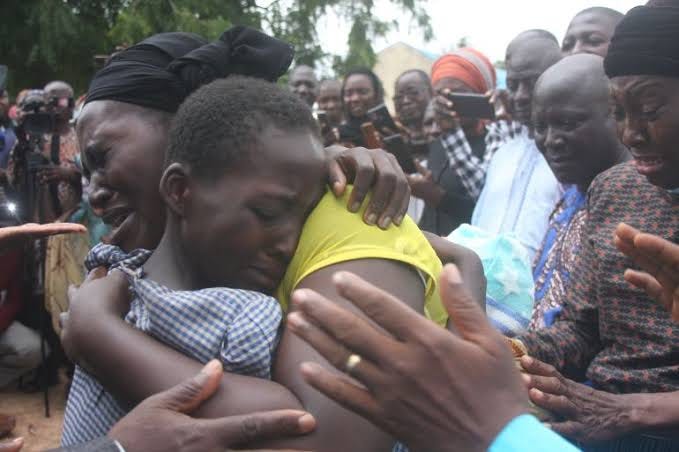
Two major incidents accounted for most of the money. In April 2026, 416 people were abducted from Ngoshe in Gwoza, Borno State. The kidnappers demanded ₦5 billion and reportedly received the full amount. Earlier, 315 pupils and staff of St Mary’s School in Papiri, Niger State, were abducted. About ₦2 billion was reportedly paid for their release. Together, the two incidents generated ₦7 billion, almost the entire ransom paid across the country.
Ordinary kidnappers, including bandits and criminal gangs, accounted for 146 recorded cases. They demanded ₦13.49 billion but collected only ₦719.4 million. Boko Haram was linked to only eight cases. It demanded ₦9.2 billion and collected ₦7 billion, a collection rate of 76.1%.
The Northwest accounted for 267 of the 396 mass abductions. Zamfara recorded the highest number, with 92 mass abductions involving 1,722 victims, followed by Sokoto with 76 incidents and 974 victims. The North accounted for 93.7% of all abductions.
The security response remains uneven. Zamfara recorded only four anti-kidnapping operations despite having the highest number of incidents, victims and civilian deaths. The gap points to a security response overwhelmed in some of the worst affected areas.
The consequences extend beyond ransom. The return of large school abductions has disrupted education and affected local economies. Farmers abandon farms because of the risk of abduction, reducing food production. Money that could have gone into consumption and investment is instead diverted to security and ransom payments.
The actual ransom economy may be higher than ₦7.78 billion. The report confirmed ransom payments in at least 86 incidents, but the exact amount was available for only 70 cases.
For Nigeria, the concern is no longer simply that kidnapping is widespread. The bigger problem is that large ransom payments are increasingly reaching organised terrorist groups. The ₦7 billion collected by Boko Haram could finance fighters and operations, creating a cycle where successful kidnappings provide money for further attacks.
This echoes the 2014 Chibok kidnapping. More than a decade later, mass abductions are no longer isolated incidents but a systematic source of funding for armed groups.
The winners: the armed groups that have turned kidnapping into a lucrative industry. The losers: the 7,825 victims and their families; the communities whose education, agriculture and livelihoods have been disrupted; and the Nigerian state, which has been unable to stop the flow of ransom money to terrorist groups.
Bottom Line: Boko Haram collected ₦7 billion from just two mass kidnappings. The cycle is clear: ransom funds attacks, attacks fund ransom. The government must break the cycle or the kidnap economy will continue to grow.