


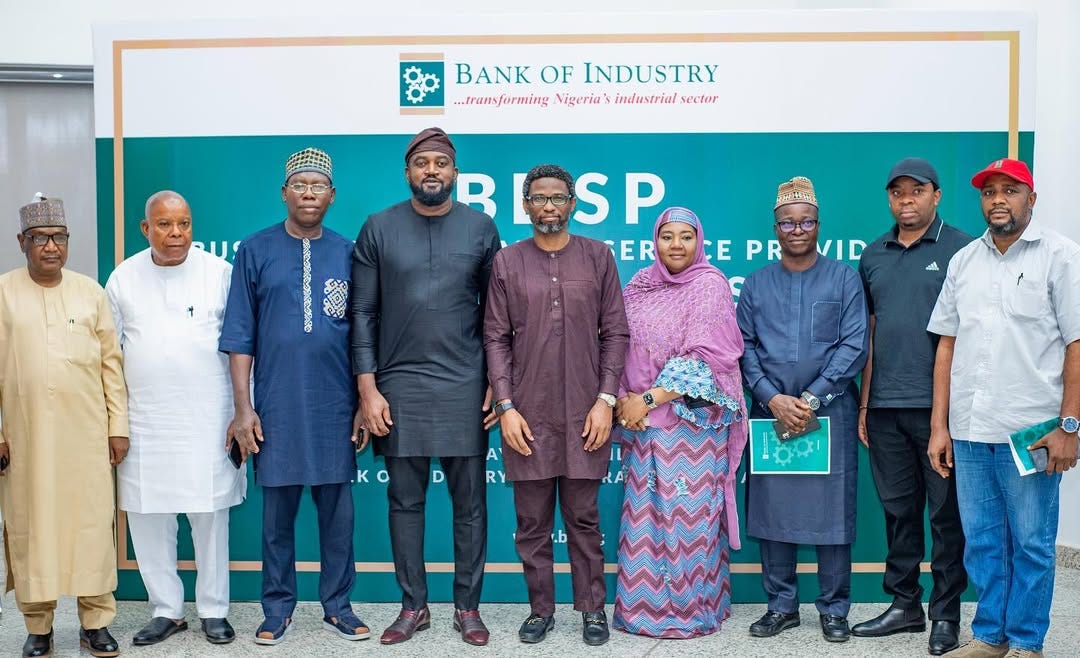
The Alliance for Economic Research and Ethics (AERE) has said that while the Bank of Industry’s (BOI) record ₦644.9 billion disbursement in 2025 marks a significant milestone for Nigeria’s industrial development, financing alone will not be enough to deliver the country’s ambition of building a $1 trillion economy.
In a policy brief signed by Dele Kelvin Oye, chairman of the Alliance, the group commended BOI for shifting its focus from measuring success by loan volumes to assessing the developmental impact of its interventions. According to the report, BOI disbursed ₦644.9 billion in 2025, supported 1.68 million jobs and financed projects across 14 strategic sectors, with more than 30 percent of its funding going to MSMEs and over 20 percent benefiting women- and youth-led businesses.
However, the alliance argued that the achievements, while encouraging, remain insufficient compared to the scale of Nigeria’s industrial challenges. “An injection of ₦644.9 billion sounds impressive until contextualised within a $400 billion economy. It is a drop of water in a desert of industrial thirst,” Oye said.
The group warned that Nigeria must create at least 4 million jobs annually just to keep pace with its youth demographic bulge, adding that the 1.68 million jobs supported by BOI financing fall well short of that requirement. The manufacturing sector remains under severe pressure, operating at less than 50 percent of installed capacity despite government interventions.
The alliance identified five major constraints undermining the sector’s competitiveness, beginning with unreliable electricity supply. Manufacturers still self-generate about 60 percent of their electricity, significantly increasing production costs and making Nigerian products less competitive against those from countries such as Vietnam, Bangladesh and Ethiopia. It also criticised commercial lending rates, which remain above 35 percent, describing them as unsustainable.
This echoes the 2010s industrial policy debates, when the government launched multiple initiatives to revive manufacturing but failed to address the structural constraints that kept the sector in decline. The mechanism then was different, but the result was the same: financing without reform will not deliver industrialisation.
The winners: the BOI, which has demonstrated its capacity to disburse funds, and the businesses that received loans. The losers: Nigerian manufacturers, who continue to struggle with infrastructure and financing constraints, and the Nigerian economy, which remains far from its $1 trillion target.
Bottom Line: BOI disbursed ₦644.9 billion. That is a lot of money. It is not enough to fix Nigeria’s industrial crisis. The structural problems remain.