


The Bank of Industry and the International Finance Corporation have signed a $50 million senior loan. The facility will expand long-term financing for micro, small and medium-sized enterprises across Nigeria. The deal forms part of a broader IFC investment package of up to $100 million in support of BOI. At least 25 per cent of the loan proceeds will go to women-owned businesses.
Nigeria’s MSMEs contribute about half of GDP and employ most of the workforce. Access to credit remains their biggest constraint. Banks prefer large corporates and government securities. Development finance has tried to fill the gap. The Bank of Industry was established in 2001 to provide industrial financing. The IFC, a member of the World Bank Group, has supported Nigerian lenders before. The current facility is one of several interventions aimed at extending patient capital to productive enterprises. The challenge is not the availability of funds. It is the cost and tenor of credit.
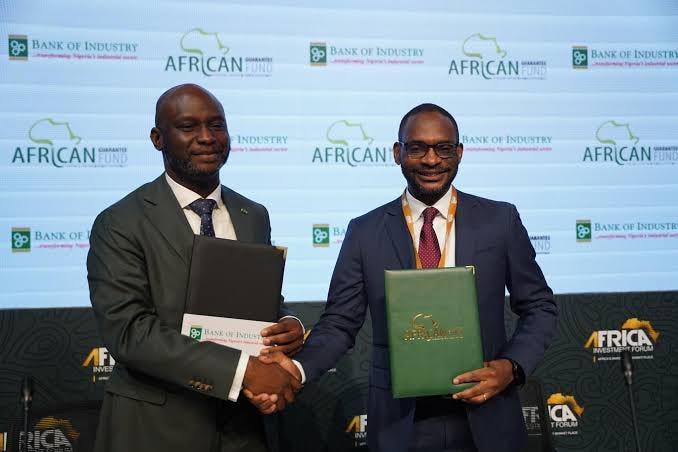
The agreement was signed at the Africa Financial Industry Summit 2026. Olasupo Olusi, Managing Director of BOI, signed for the bank. Makhtar Diop, Managing Director of IFC, signed for the corporation. The loan has a seven-year tenor. That will strengthen BOI’s funding base and allow it to offer longer-term finance. The target sectors are manufacturing, agriculture and renewable energy. The creative industries are also included. The deal combines direct development finance with domestic capital market mobilisation.
Olusi said the transaction demonstrates the power of strategic development finance partnerships. “This partnership represents a strong vote of confidence in BOI’s mandate, institutional capacity and role in advancing Nigeria’s industrial development,” he said. He said the facility will strengthen the bank’s ability to provide long-term financing with a deliberate focus on women-owned businesses.
Diop said expanding access to long-term finance is essential. “Through our partnership with the Bank of Industry, we are combining financing with local capital-market solutions to mobilise more private capital and expand local-currency funding for MSMEs,” he said.
The IFC support aligns with BOI’s strategic priorities. These include MSME development, gender inclusion, enterprise growth and sustainable industrialisation. In October, Olusi said the bank disbursed ₦644.9 billion to Nigerian enterprises in 2025. Of that, ₦120.9 billion went to women-led businesses.
Winners: MSMEs, which gain access to longer-term finance. Women-owned businesses, which gain a dedicated share. BOI, which strengthens its funding base. IFC, which expands its Nigerian portfolio. The manufacturing, agriculture and renewable energy sectors. Losers: Banks that do not lend to MSMEs, which face competition. Informal lenders, which charge higher rates. Businesses without collateral, if the loan terms remain restrictive. The naira, if foreign currency borrowing increases exposure.
Bottom Line: Fifty million dollars is not enough to close the MSME credit gap. It is a start. The seven-year tenor matters more than the amount. Nigerian businesses need patient capital, not short-term loans. BOI and IFC have provided some. The test is whether it reaches the businesses that need it most.