


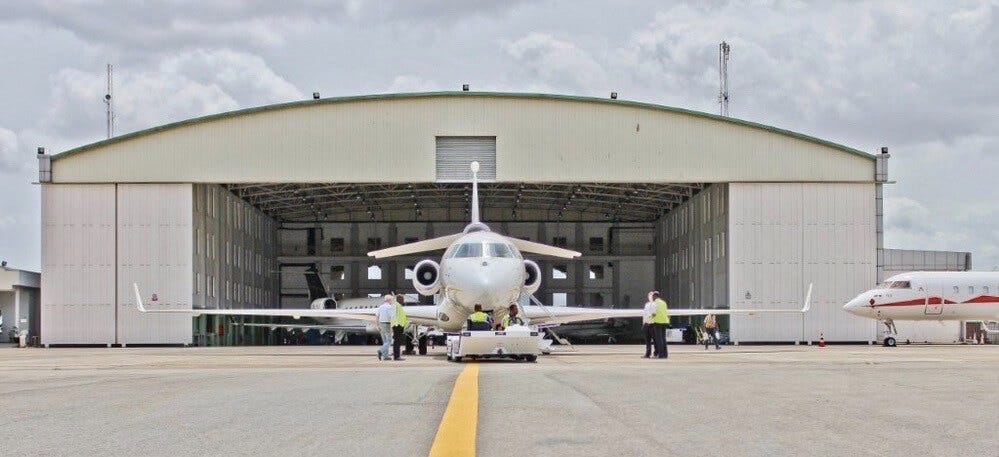
US aerospace giant Boeing is shifting its strategy in Nigeria from simply selling aircraft to providing technical support for local airlines and aviation service providers. The move comes as Nigerian domestic carriers actively upgrade their fleets to break out of regional boundaries and launch long-haul international routes.
The manufacturer is actively dispatching engineering and flight crews from the United States to Nigeria to conduct hands-on training workshops for local pilots and engineers. Beyond technical upskilling, Boeing’s strategic moves include providing network planning advisory services for airline expansion and infrastructure engineering advisory services for local aviation agencies to help modernise airport runways.
Notably, the commercial landscape is shifting away from costly wet-lease arrangements (ACMI) towards more profitable dry leases and direct purchases, which offer greater control over assets. United Nigeria Airlines recently acquired two Boeing 737-800NG aircraft to support its domestic operations and newly allocated international routes, highlighting this structural shift. Wet leases provide the aircraft along with full crew, maintenance and insurance. In contrast, dry leases provide only the aircraft, with the lessee responsible for crewing, maintenance, and insurance.
To further validate its narrow-body momentum, Air Peace recently acquired three Boeing 737-800 aircraft from South Korea’s Jeju Air. The transaction, valued at 144.72 billion won (approximately $97.5 million), will significantly boost the capacity of its existing mainline fleet.
Moore Ibekwe, Boeing’s Executive Director of Sales for Commercial Aeroplanes in Africa, said the company is intentionally embedding itself into the local ecosystem to raise technical capabilities. “Our people have been travelling to Nigeria from time to time to help airlines maintain their Boeing aircraft,” Ibekwe said. “We have a team that runs workshops, basically to help airlines put together business plans and improve their route network designs. We’ve also been running leadership training in Nigeria recently.” He added that the programme includes deploying Boeing’s experienced flight crews to work directly with local pilots to improve safety standards. “We do have an airports engineering capability group that will also be advising the Federal Airports Authority of Nigeria (FAAN) and the Nigerian Airspace Management Agency (NAMA) when it comes to developing and improving our runways and airport infrastructure,” Ibekwe said.
According to Boeing’s market forecasts, Africa will require roughly 1,200 new aircraft deliveries over the next two decades. Managing this massive influx will require an estimated 77,000 highly trained aviation professionals across the continent, a metric that is driving Boeing’s decision to establish an early technical footprint in Nigeria.
Previously, domestic airlines gradually shifted away from ordering or deploying large mainline models such as the Boeing 727, 747, 777, and Airbus A220-300. Carriers are actively shifting to leaner regional platforms for their domestic and West African operations, with fleet deployments now dominated by ERJ-145 hopper jets, CRJ series aircraft, ATR 72 turboprops, and modern Embraer variants. However, there appears to be a resurgence of Boeing aircraft, especially Boeing 737s, as Boeing offers incentives to woo domestic airlines planning to operate international routes.
“Nigerian airlines are increasingly adopting the Boeing 737NG and Airbus A320 families to combat the skyrocketing Jet-A1 fuel costs and infrastructural bottlenecks,” said Samuel Caulcrick, former Rector of the Nigerian College of Aviation Technology. “Nigerians travel with a lot of luggage, and because the payload-to-fuel burn ratio of smaller regional jets cannot sustain the high costs per block hour, airlines require higher-capacity narrow-body aircraft to maintain profitability.” According to Caulcrick, the fixed operational costs of landing fees, navigation charges and crew remain largely the same, making the cost-per-seat economics of larger aircraft more attractive.
This mirrors the 2010s telecommunications boom, when global technology companies shifted from selling equipment to providing local technical support and training. The mechanism then was different, but the result was the same: deeper local engagement and a more sustainable business model.
The winners: Nigerian airlines, which gain access to technical expertise; Boeing, which builds long-term relationships with growing carriers; and Nigerian passengers, who benefit from improved safety and service standards. The losers: European and Asian competitors who may lose market share to Boeing, and smaller regional carriers who may struggle to compete with better-equipped local airlines.
Bottom Line: Boeing is no longer just selling planes in Nigeria. It is building an ecosystem. That is good for Nigerian aviation. It is also good for Boeing’s bottom line.