


A passenger boat travelling from Ayama to Ukubie Community in Southern Ijaw Local Government Area, Bayelsa State, capsized at about 11:00 am on Friday. The Bayelsa State Police Command confirmed four deaths, including two children, and the rescue of 24 survivors. The incident occurred at the river junction between Oweikorogha and Otuan communities. Nineteen survivors were taken to Ayama Clinic, while five with injuries were transferred for further treatment. The police arrested the boat manager.
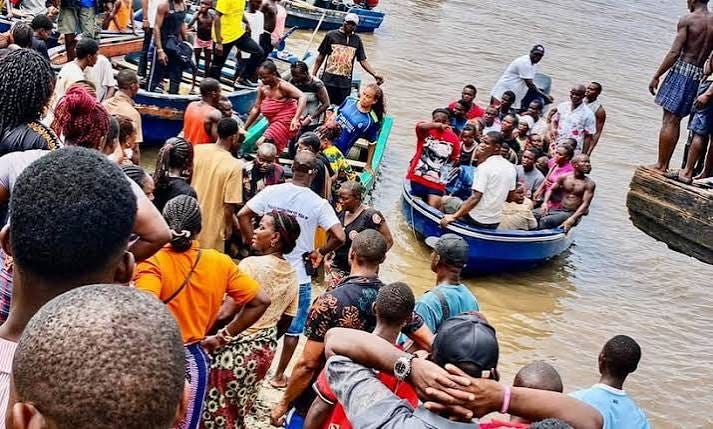
The mechanics of the tragedy are a recurring template. Passenger boats in Bayelsa and the wider Niger Delta routinely carry more people than they are licensed for, because the alternative is leaving passengers stranded at a jetty with no road alternative. The water is the road, and the road is unregulated. A boat that capsizes at a river junction is not an accident of nature. It is an accident of arithmetic: too many passengers, insufficient enforcement, and a safety regime that exists on paper.
This echoes the long record of boat disasters in Bayelsa, Rivers and Delta states, each of which produces a police statement, a rescue count, and no change to the conditions that caused it. It also mirrors the broader pattern of Nigerian transport regulation being strongest where the roads are paved and weakest where they are not.
The winners are the police, who can report a rescue and an arrest, and the boat manager, who will face a legal process. The losers are the four dead, including two children who were travelling to a burial, and the 24 survivors who will carry the memory of a river that swallowed their fellow passengers.
Bottom Line: A boat capsizes and a manager is arrested. The waterway that allowed the overload is still open.