


The All Progressives Congress (APC) has presented President Bola Tinubu’s official 2027 re-election manifesto. The document promises economic stabilisation, stronger institutions and better national security. It is a campaign document, not a budget. That distinction matters. A manifesto tells voters what a party would like to do. A budget tells them who pays and who waits. The APC has given Nigerians the first without the second.
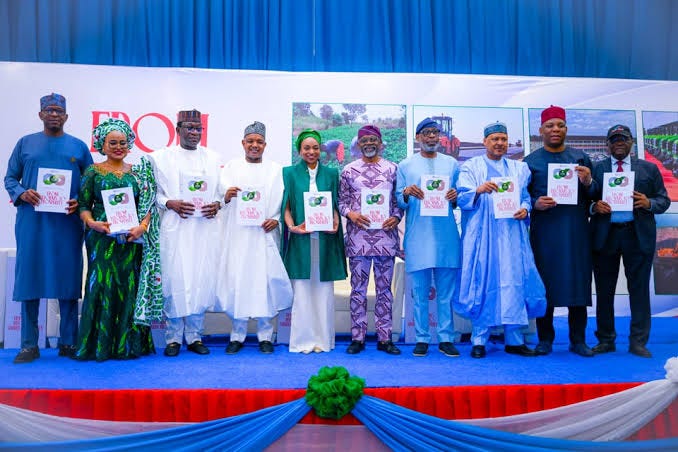
The timing is predictable. Incumbents publish manifestos late to avoid scrutiny of costings. Challengers publish early to define the debate. The APC is doing the former. The party wants the election to be a referendum on continuity, not a contest of detailed plans. That is a rational strategy. It is also a risky one. Voters who have lived through subsidy removal, exchange rate reform and inflation will ask a simple question: what changes in the next four years that did not change in the last four?
The mechanics of the manifesto follow a familiar pattern. Economic stabilisation means fiscal discipline, tax reform and exchange rate management. Institutional governance means judicial reform, civil service efficiency and anti-corruption. National security means more funding for the military, police reform and intelligence coordination. Each promise is plausible in isolation. Together, they compete for the same scarce naira. The manifesto does not say which promise gets funded first when oil prices fall or when debt service eats more revenue.
The historical echo is the 2015 APC manifesto. That document promised change, jobs and security. It was long on aspiration and short on arithmetic. The 2019 Next Level document repeated the pattern. Both were judged by delivery, not by prose. The 2027 manifesto will face the same test. The difference is that the fiscal space is tighter. Federal allocations have risen after subsidy removal, but debt service and recurrent spending absorb much of the gain. States still depend on monthly FAAC disbursements. A promise without a funding line is a slogan with a cover page.
The winners are clear. The presidency gains a campaign document that frames the election on its terms. Party loyalists gain a checklist for rallies. Consultants and speechwriters gain another cycle of work. The losers are equally clear. Young Nigerians who expected jobs will hear promises again. Small businesses that need credit will hear about stabilisation. Families that face insecurity will hear about funding. None of them will see a costed plan. The manifesto may still win votes. But it will not answer the question that matters: who pays for the promises, and when?
The political economy of manifestos is simple. They are written for coalition management, not for accounting. They reassure party elites, donors and international partners. They are not meant to be read as budgets. But Nigerians have become more sceptical since 2015. Social media makes it easy to compare promises with outcomes. A manifesto that avoids costings invites the opposition to fill the gap with its own numbers. That is a strategic opening. The APC may regret it.
Winners: The presidency, party loyalists, consultants and speechwriters.
Losers: Young Nigerians expecting jobs, small businesses needing credit, families facing insecurity.
Bottom Line: The APC has published a wish list. Nigerians will judge it by the budget lines that follow, not by the promises on the page.