


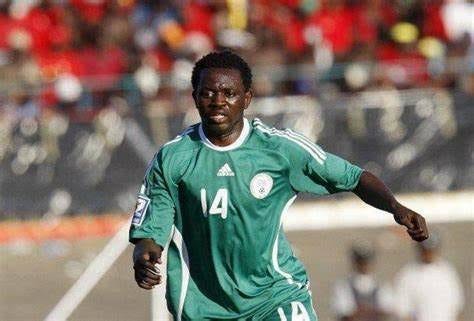
Former Super Eagles player, Oluwafemi Ajilore, has called for increased government and private-sector investment in football to support the development of clubs and competitions in the Federal Capital Territory (FCT). Ajilore made the call in Abuja while speaking on the challenges confronting football development in the FCT.
He said government alone could not provide the financial resources required to sustain football clubs and competitions, urging corporate organisations to increase their support through their Corporate Social Responsibility (CSR) initiatives. “Every country that has tried in football has invested a whole lot in football. The investment cannot only be done by the government. Government has a big role to play so that sports, not just football, can improve because if you look at the economic impact of sport, it is really big,” he said.
Ajilore said many football clubs in Nigeria were owned and financed by individuals who often had to contend with competing financial responsibilities. He therefore urged corporate organisations to support clubs and competitions to reduce the financial burden on club owners. He also identified security and a conducive business environment as key factors that could encourage investors to commit funds to football.
Ajilore also expressed optimism that FCT-based clubs competing in the Nationwide League One (NLO) would gain promotion to the Nigeria National League (NNL) and eventually produce a team capable of playing in the Nigeria Premier Football League (NPFL). He said securing NPFL status for an FCT-based club remained a major ambition of the FCT Football Association.
The call for investment in FCT football is timely. The absence of an NPFL club in the nation’s capital is a gap that needs to be filled. Ajilore’s appeal for corporate support is a recognition that government alone cannot sustain football. The economic impact of sport is significant, and investment in football could create jobs and stimulate economic activity.
This echoes the 2010s calls for corporate investment in Nigerian football, which saw several companies sponsor clubs and competitions. The mechanism then was different, but the result was the same: a recognition that football requires sustainable funding.
The winners: the FCT Football Association, which aims to produce an NPFL club; and the Nigerian football community, which would benefit from a top-flight club in the capital. The losers: the clubs that struggle without adequate funding; and the Nigerian government, which must create an enabling environment for investment.
Bottom Line: Ajilore wants more investment in FCT football. The capital needs a top-flight club. The question is whether the investment will come.