


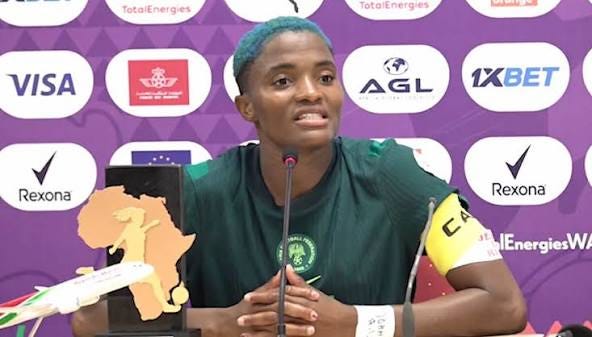
Rasheedat Ajibade has announced an upcoming joint podcast with former international Peter Odemwingie. Ajibade captains Nigeria’s women’s national team. The podcast promises an insider breakdown of a decade of administrative friction with the Nigeria Football Federation (NFF).
Player-federation friction is a recurring theme in Nigerian football. In 2014, the Super Eagles nearly missed the World Cup over bonus disputes. In 2019, the Super Falcons protested unpaid allowances after the Women’s World Cup. In 2022, the team staged a sit-in in Abuja over owed bonuses. In 2023, the NFF faced criticism over treatment of the women’s team after their World Cup exit. The pattern spans both genders. Players win matches. Administrators create problems.
The podcast is a new platform for old grievances. Odemwingie has been vocal about his own experiences with the NFF. He was a key striker for the Super Eagles in the 2000s and 2010s. Ajibade is an active captain. Her willingness to speak publicly is notable. Active players rarely criticise the federation. They fear exclusion. Ajibade’s profile gives her some protection.
The podcast will cover administrative friction. That includes unpaid bonuses, poor logistics, unclear selection processes and lack of player welfare. These issues affect performance. Players who worry about allowances cannot focus on football. The NFF’s failures have cost Nigeria trophies.
The timing matters. The Super Eagles are in AFCON qualifiers. The Super Falcons are preparing for future tournaments. Public criticism of the NFF adds pressure. It may force reforms. It may also create distractions.
Winners: Ajibade and Odemwingie, who gain platforms. Fans, who gain insight. Journalists, who gain material. Reform advocates, who gain visibility. Losers: The NFF, whose failures are documented. Players who prefer silence. Administrators who resist transparency. The federation, if the podcast sparks unrest.
Bottom Line: Two players are telling their story. The NFF cannot control the narrative. A decade of friction deserves to be aired. The podcast will not fix the federation. It will document why it fails.