


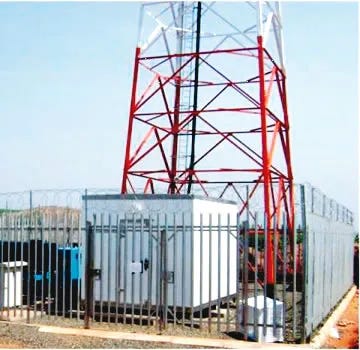
Airtel Africa has reduced its diesel consumption by 9.1 million litres in one year, marking a significant shift towards cleaner and more efficient network operations. The company achieved the reduction by decreasing its reliance on diesel generators and expanding the use of low-carbon energy across its operations in 14 African countries.
Speaking at a media roundtable in Lusaka, Zambia, Airtel Africa CEO Sunil Taldar said the company switched 390 telecom infrastructure sites from diesel to national grid power during the year. He said the move improved operational efficiency while significantly reducing carbon emissions.
The announcement highlights a growing trend among African telecom companies to reduce the cost of powering network infrastructure. With unreliable electricity supply in many countries, operators have historically relied heavily on diesel generators, making energy one of the industry’s largest operating expenses. Reducing diesel consumption lowers operating costs and enhances long-term sustainability, as investors increasingly focus on environmental performance.
Beyond diesel reduction, Airtel Africa said it recycled 94 percent of all waste generated during the financial year as part of its efforts to promote a circular economy and reduce its environmental footprint. Taldar said responsible business growth remains central to Airtel Africa’s strategy. The company’s network now covers 81.9 percent of the population across its 14 markets.
Airtel Money now serves 54.1 million customers through a network of 2.4 million agents. Women account for 44.1 percent of Airtel Money users, reflecting increasing access to formal financial services for female entrepreneurs and underserved communities.
Through its charitable arm, the Airtel Africa Foundation, the company invested $6.2 million during the year in projects focused on financial inclusion, education, environmental sustainability and digital inclusion. Working with UNICEF, Airtel Africa connected 3,296 schools to free internet services, helping more than 2 million students and 38,868 teachers access online educational resources. The company also supported 64 zero-rated digital learning platforms, enabling more than 11 million learners to access educational content without incurring data charges.
This echoes the 2010s mobile money boom, when telecom operators transformed financial inclusion across Africa. The mechanism was different then, but the result was the same: telecom companies are proving they can drive social change while growing their businesses.
The winners: Airtel Africa, which has lowered costs and improved its environmental credentials; the environment, which benefits from reduced diesel consumption; and the millions of customers who benefit from more reliable and sustainable connectivity. The losers: diesel suppliers, who lose a major customer, and competitors who have not yet made the same transition.
Bottom Line: Airtel cut diesel use by 9.1 million litres. That is good for the environment. It is also good for the bottom line. The green telecom race is on.