


Air Peace has increased flight frequency on the Lagos-Abuja route to nine daily services, effective 17 November, citing rising passenger demand along one of the country’s busiest aviation corridors. The airline said the additional prime-time departures from both cities would benefit business travellers, corporate executives and government officials who need same-day returns. The move follows a broader effort to optimise the carrier’s domestic network.
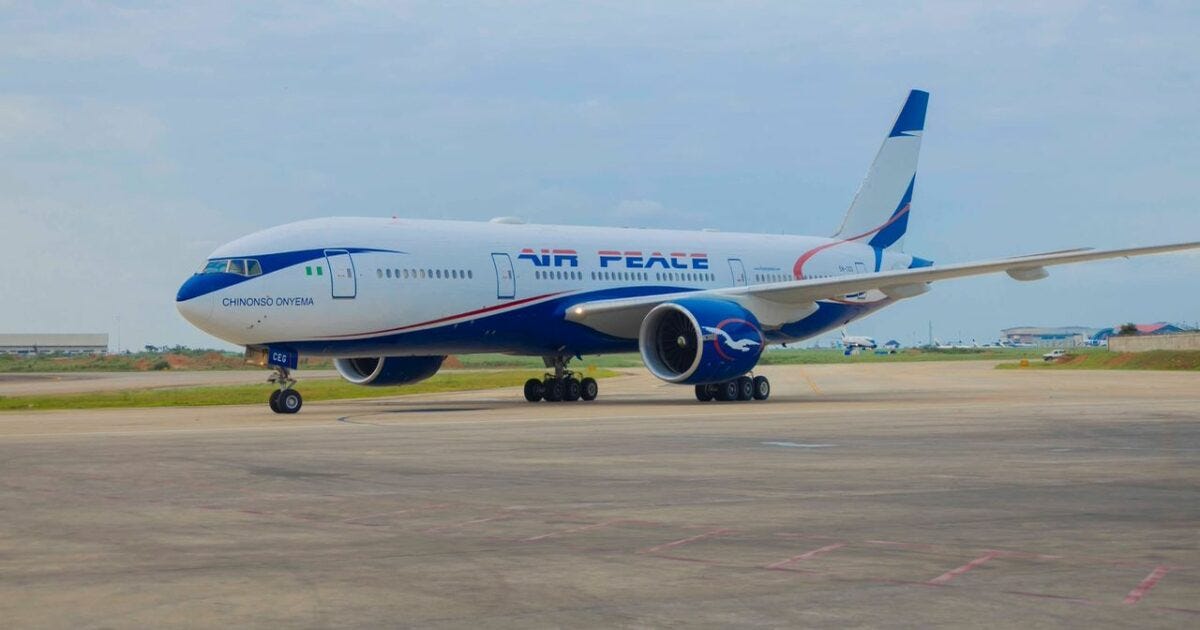
The mechanics of domestic aviation in Nigeria are brutal. Fuel costs are denominated in dollars, fares are in naira, and the margin between profit and loss is thin. Adding flights increases capacity, but it also increases exposure to the same cost pressures that have grounded competitors. The Lagos-Abuja route is the only domestic corridor with enough volume to justify nine daily frequencies. Every other route is a thinner bet. Air Peace is doubling down on the one lane where demand is reliable.
This echoes the post-pandemic recovery, when domestic travel rebounded faster than international routes, and airlines rushed to add frequencies. It also mirrors the longer pattern of Nigerian carriers expanding on the Lagos-Abuja trunk route and then retreating when fuel prices spike or the naira weakens.
The winners are business travellers who get more departure options, and Air Peace, if it can fill the seats. The losers are smaller carriers that cannot match the frequency, and passengers on thinner routes, who will see capacity redirected to the corridor where the yields are.
Bottom Line: Nine flights a day between Lagos and Abuja is a vote of confidence in one route. It is not a vote of confidence in Nigerian aviation.