


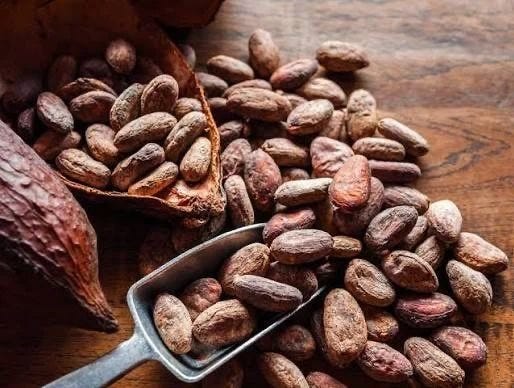
The countries that grow most of the world's cocoa will gather in Abuja on Tuesday to declare that the century of exporting raw beans is over. Nigeria, Ghana, Côte d'Ivoire and Cameroon, which together account for about two-thirds of global cocoa production, are expected to sign the Abuja Declaration at the Cocoa Value Addition Summit 2026. The declaration will establish a Cocoa Value Addition Alliance to coordinate policies, promote local processing, harmonise standards and strengthen Africa's bargaining power in the global cocoa industry.
"For a hundred years, Africa has sent its cocoa to the world in sacks and received it back in wrappers, paying at both ends of the transaction," said Senator John Owan Enoh, Nigeria's Minister of State for Industry, who will host the summit. "The distance between a bean and a brand is measured in jobs and in dignity, and on Tuesday, in Abuja, four nations begin closing that distance together. We do not gather to lament the market. We gather to redesign our place in it."
Africa accounts for roughly 70% of global cocoa production, yet earns less than 6% of the value of the global chocolate market, which is valued at over $`130 billion. This imbalance is not a market failure, but a structural issue where Africa provides a raw material while the added value, branding and pricing control are held elsewhere. Nigeria is the world's fourth-largest cocoa producer after Côte d'Ivoire, Ghana and Indonesia, while Côte d'Ivoire and Ghana together account for more than half of global production.
The alliance's push comes against a backdrop of unprecedented volatility in the international cocoa market. Global prices have surged to record highs above $11,000 per metric tonne before falling sharply to about $3,000 and later recovering to around `$5,000, creating uncertainty for producers and exposing farmers to severe income fluctuations.
In addition to the regional declaration, Nigeria will sign a Cocoa Value Addition Accord, a national compact bringing together the Federal Government, cocoa-producing states, farmer groups, processors, researchers and development finance institutions to commit to measurable targets on domestic processing, farmer incomes and investment. Implementation will be overseen by a delivery council chaired by the Minister of State for Industry, with progress reports published annually.
Industry stakeholders have welcomed the initiative. Adeola Adegoke, Global President of the Cocoa Farmers Alliance Association of Africa (COFAAA), has called for a complete overhaul of the global cocoa economy. "Cocoa is not just a commodity; it is a livelihood, a legacy, and a lifeline for millions of African families. If Africa produces 70% of the world's cocoa, then Africa can and must claim its rightful share of value, dignity, and prosperity."
However, Oba Dokun Thompson, the Oloni of Eti-Oni in Osun State and founder of the International Cocoa Diplomacy (ICD), has warned that value addition will remain rhetoric without practical action. "I constantly hear the same refrain: 'We must add value to get more from our raw materials.' Yet, 99 percent of the time, these are hollow words—buzzwords used to whip up sensational headlines without a practical roadmap or actionable suggestions," he said. He argues that cocoa-consuming countries have spent centuries developing research, innovation, branding and industrial systems that enable them to derive maximum economic value from cocoa.
One of the immediate priorities of the alliance will be the implementation of the European Union Deforestation Regulation (EUDR), which comes into effect for large and medium-sized operators on December 30, 2026. The regulation requires plot-level traceability for cocoa exported to the European Union, which accounts for roughly 60% of global cocoa imports. Under the proposed alliance, member countries intend to adopt a common position on implementation, including recognition of national traceability systems and ensuring that compliance costs are not unfairly transferred to millions of smallholder farmers.
The stakes are high. African cocoa farmers earn a fraction of the value generated by the global chocolate industry, with many living in poverty despite their central role in the global value chain. Adegoke has warned that the hands that grow the cocoa should not live in poverty, and that the same farmers whose sweat sustains a 6,000 per metric tonne to guarantee fairer farmer incomes and buffer farming families against extreme price swings. However, it emphasises that supply management and strategic reserves within Africa must dictate prices, rather than leaving the livelihood of smallholders to the whim of futures markets in London and New York.
The winners: African cocoa farmers, who stand to gain from improved incomes; African processors, who will benefit from expanded local demand; and the four member countries, which will capture more value from the global cocoa industry. The losers: multinational processors and chocolate manufacturers, who face higher raw material costs and reduced market power; European buyers, who must navigate new compliance requirements; and smallholder farmers who remain vulnerable to price shocks.
Bottom Line: Africa's cocoa giants are uniting to end a century of raw bean exports. The ambition is right. The rhetoric is bold. The question is whether they can turn a declaration into a transformation.