


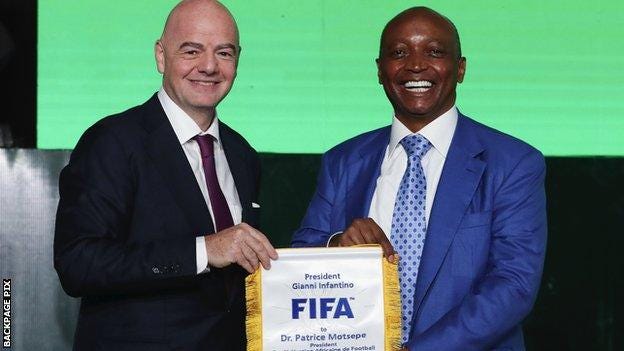
In the row which has engulfed global football and the man who runs it, Gianni Infantino, could Africa end up as a lone voice of support for the FIFA president? While European governing body Uefa has voted to boycott FIFA competitions, including World Cups, if plans go ahead to sell stakes in those competitions to private investors, the Confederation of African Football (Caf) has remained largely silent so far.
Much of that has to do with the close relationship between Caf, FIFA and Infantino. Caf president Patrice Motsepe lauded Infantino for his “excellent work” after this year’s World Cup and hailed the Swiss as “a good friend.” “He is loyal to Africa,” Motsepe said on 22 July. “When people have been loyal to you, you never stab them in the back.”
FIFA’s aim is to create a commercial subsidiary to run its main events and allow external investors to buy stakes in it. FIFA estimates the subsidiary could raise $4.2bn (£3.1bn) later this year, with the net benefits being reinvested into the global game. African countries have already benefited from previous FIFA funding. The new sums at stake could continue to transform the footballing landscape on the continent.
African federations, however, may need to be careful what they wish for, with some people questioning whether governments will continue to fund organisations receiving significant support from elsewhere. “Should football be commercialised in the manner in which it potentially could be if this proposal were to go through?” asked Isha Johansen, a former president of the Sierra Leonean FA. “What price does one have to pay in order to get to this elevated development for football in Africa?”
The Nigerian stake is clear. Nigeria is Africa’s most populous country and a major football power. The decision on FIFA’s proposal could have significant implications for Nigerian football. If African federations support the plan, Nigeria could benefit from increased funding. However, the proposal also raises questions about the commercialisation of the sport.
From a Nigerian vantage point, the decision is a difficult one. The lure of funding is strong, but the long-term implications of commercialisation are uncertain. The Nigerian Football Federation must carefully weigh the costs and benefits.
This echoes the 2018 FIFA World Cup expansion, which also saw Africa benefit from increased spots. The mechanism then was different, but the result was the same: a recognition that FIFA’s decisions have significant implications for African football.
The winners: African football federations, which could benefit from increased funding; and FIFA, which would secure support for its proposal. The losers: European football, which opposes the plan; and the integrity of the sport, which could be compromised by commercialisation.
Bottom Line: Africa may back FIFA’s controversial plan to sell stakes in its competitions. The lure of funding is strong. The question is whether the price is worth paying.