


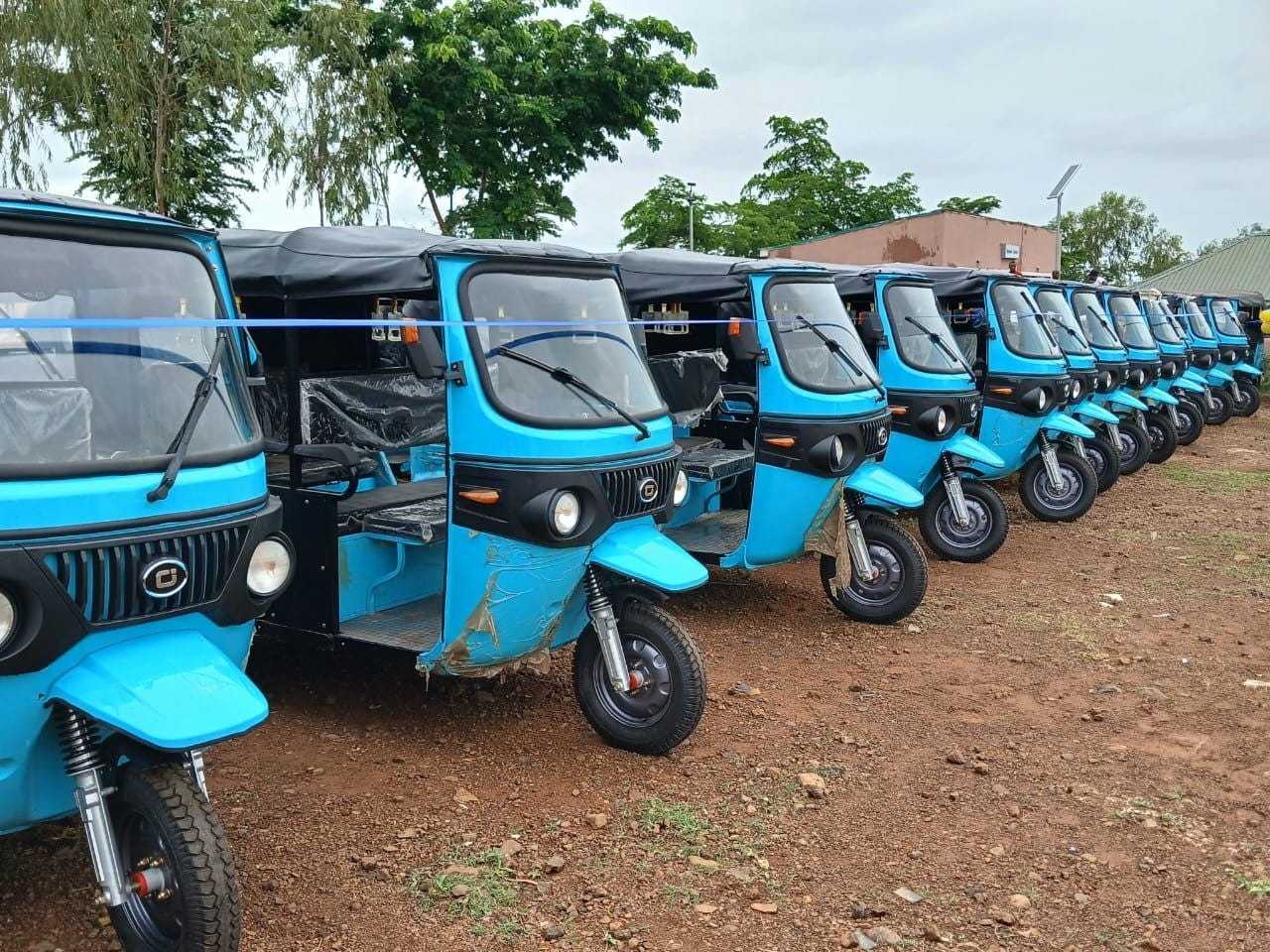
P-GAT Industries Ltd will give 2,000 fuel-powered tricycle riders in Adamawa up to 50% fuel subsidy. The company’s president, Prime Timothy, announced the programme in Yola on Saturday. It is called ATRaS, or Affordable Transport Solution. The first phase covers Numan, Yola and Mubi. P-GAT will recruit up to 500 agents to handle registration, onboarding and distribution.
The design is simple. Instead of asking riders to cut fares, the company attacks their two biggest costs: fuel and maintenance. Participants get fuel subsidies, health support, repair assistance, welfare benefits and access to education and career development. Existing fuel-powered tricycles qualify. The plan is to gradually move the fleet to electric mobility.
Nigeria has tried to cushion transport costs before. The 2012 Occupy Nigeria protests forced a partial reversal of fuel subsidy removal. The Babangida-era structural adjustment programmes cut subsidies and triggered transport fare hikes. Each time, the mechanism collapsed under distribution problems. P-GAT’s agent model, with 500 recruits across three local government areas, is an attempt to solve the last-mile delivery problem.
The economic logic has a gap. A 50% fuel subsidy is a recurring cost, not a one-off capital injection. For a rider spending ₦3,000 a day on fuel, a 50% subsidy cuts that to ₦1,500. That is real relief. But P-GAT has not disclosed its funding source, subsidy duration or verification mechanism. Those details will determine whether this is sustainable or a pilot that fades.
The electric transition adds another layer. Electric tricycles cost more upfront and need charging infrastructure. Adamawa’s grid coverage is uneven. The promise of a gradual shift is credible only if financing and charging networks follow. P-GAT says it plans to expand across Northeast Nigeria and into Kenya and South Africa. That is ambition, not a plan.
The timing matters. Transport costs are one of the most visible inflation channels. When fuel prices rise, tricycle fares follow within days. Any programme that credibly reduces operating costs for riders can lower fares without a government mandate. That is the appeal.
Winners: Tricycle riders in Numan, Yola and Mubi who qualify. Commuters, if lower costs translate to lower fares. P-GAT, which gains a registered rider base.
Losers: Competing operators who do not receive subsidies and face price pressure. Riders outside the pilot areas. Taxpayers, if the programme eventually requires public funding.
Bottom Line: A 50% fuel subsidy is easy to announce and hard to sustain. The agent model will decide whether ATRaS works.