


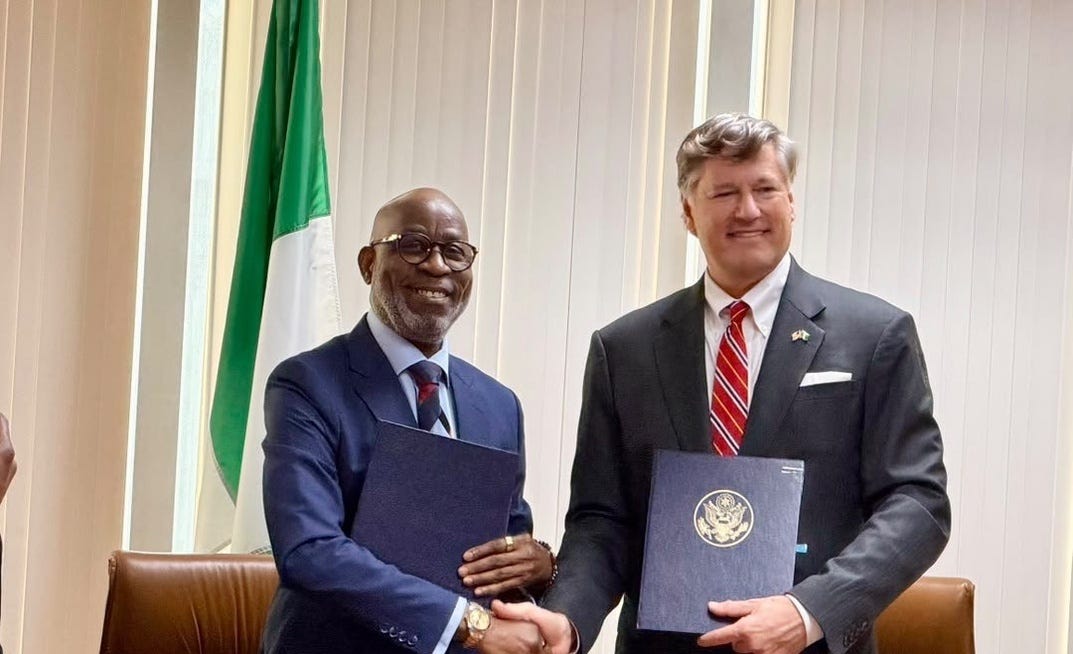
The Arewa Consultative Forum has demanded full disclosure of Nigeria’s minerals framework with the United States. The ACF is a prominent northern socio-cultural group. It said a deal involving the nation’s mineral wealth cannot be negotiated in secret. The framework was signed in September on the sidelines of the UN General Assembly in New York. The Minister of Solid Minerals, Dele Alake, signed for Nigeria. US Deputy Secretary of State Christopher Landau signed for Washington.
Nigeria’s mining sector has been neglected since the oil boom of the 1970s. The 2007 Minerals and Mining Act liberalised the sector. Implementation lagged. Ajaokuta Steel has never produced commercial steel. Artisanal mining expanded without regulation. In recent years, lithium became the prize. Global demand for batteries surged. Chinese firms moved first. They built processing plants in Nasarawa, Kogi and Kwara. The US is now seeking supply chains outside China. Nigeria’s lithium, gold, tin and lead-zinc deposits are the attraction.
The ACF said the agreement is opaque. Its spokesperson, Professor Tukur Muhammad-Baba, issued a statement. “The reported deal remains opaque, particularly in the absence of sufficient publicly available information regarding the terms, scope, financial commitments and implementation frameworks,” he said. He said citizens have a constitutional right to know what was signed. He asked who will own the geological data gathered from Nigerian soil. He asked who pays for environmental cleanup when mining ends. He asked whether communities will get jobs, water and roads.
Much of the controversy centres on a figure. $700 billion was widely reported as the value of the deal. It is not. It is an estimate of Nigeria’s total mineral wealth. Dr Ikenna Okonkwo of SBM Intelligence said the government’s poor communication created the confusion. “There was this tendency to show that something has been done,” he said. “The $700 billion made it sound like that was the deal.” He said the framework is one of future cooperation, not a substantive contract.
He placed the blame on the government. “Nigerians do not trust the government,” he said. “When you hear large amounts discussed, framework agreements with foreign governments, you add that to the distrust. It gives rise to all of the suspicion.” He said the government could have explained the framework better. It chose brevity. Speculation filled the gap.
Okonkwo also addressed the security question. Most of Nigeria’s minerals sit in the north. Banditry and insurgency have made those areas dangerous. He said insecurity has not stopped investment. “The Chinese are very active in the area,” he said. They have built processing plants in the north-central states. The US is taking “baby steps” by comparison. He said foreign investment could force the government to secure the region. “Insecurity in northern Nigeria thrives because the government is not present in many parts of the north.” Investment would require presence. Presence would require security.
Winners: The ACF, which asserts public interest. The US, if it gains mineral access. Chinese firms, which retain their head start. Local processors, if the framework delivers. Communities in mining areas, if jobs and infrastructure follow. Losers: The Federal Government, whose communication failed. Citizens, who remain in the dark. Communities facing insecurity, if investment arrives without protection. Environmental advocates, if safeguards are absent. Local miners, who may be displaced by industrial operations. The government’s credibility, which suffers with every opaque deal.
Bottom Line: A framework was signed. A figure was misreported. A group demanded transparency. The government stayed quiet. The ACF asked the right questions. Who owns the data? Who pays for cleanup? Who gets the jobs? The government must answer. Secrecy breeds suspicion. Suspicion breeds resistance. Nigeria’s minerals can fund development. They can also fund conflict. Transparency is the difference.