


Praise Ugoh won Nigeria’s first ever 400m gold at the Dakar 2026 Youth Olympic Games on Monday, clocking a personal best of 52.76 seconds at the Complexe Iba Mar Diop. The remarkable part is that she had never run the distance competitively before. “I’m a sprinter, this is my first time running the 400m,” she said afterwards . She had arrived in Dakar hoping to run the shorter sprints, missed selection, and entered the 400m almost as an afterthought. Then she won it.
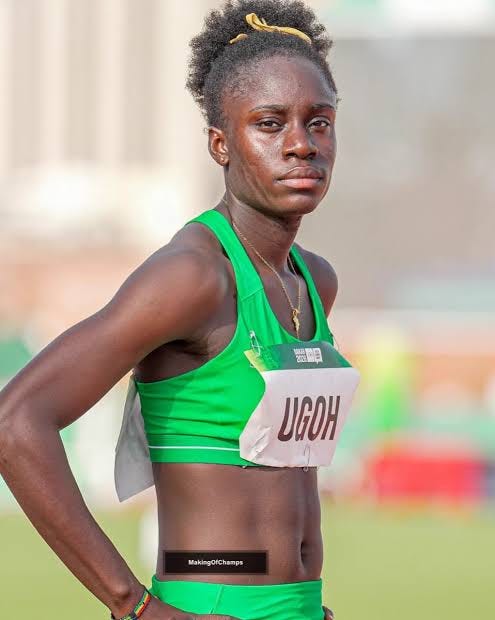
The mechanics of the race deserve attention. Ugoh ran 54.38 seconds in her semi final on Sunday, finishing second behind Venezuela’s Osmary Pacheco . Less than 24 hours later she took more than a second and a half off that time. Pacheco took silver in 52.85 seconds, while Aisha Muhammed of the United Arab Emirates claimed bronze in 53.06 . Ugoh’s coach had told her to target 53 seconds. She beat that instruction by a comfortable margin and surprised herself in the process. “I was not expecting a gold at all,” she said .
The historical context matters here, and it cuts two ways. Nigeria has a deep sprint tradition at the Youth Olympics. Rosemary Nwankwo won the girls’ 100m on Sunday, following Josephine Omaka in 2010 and Rosemary Chukwuma in 2018 . Gift Bright won the boys’ 100m in a Games record 10.28 seconds, the first Nigerian boy to take that title . Those are the events Nigeria expects to win. The 400m is not. Ugoh’s gold is the country’s first at the distance in Youth Olympic history, which says something about how thin the middle distance pipeline has been.
Now the trade offs. Ugoh’s victory lifts Nigeria to 11th on the medal table with three golds and no silvers or bronzes . That is the country’s best ever Youth Olympics campaign by gold count. But the concentration is telling. All three golds came from track events in a single weekend, and two of them from sprinters who were not favoured entrants. The broader Nigerian contingent in Dakar has not produced medals elsewhere. A sprinting nation that wins by accident in the 400m is a nation with a narrow athletic base and a lucky weekend.
The winners are clear. Ugoh gets a personal best, a gold medal and a lesson in self belief she articulated better than most press officers could. “I should never doubt myself,” she said . The athletics federation gets a historic result it did not plan for. The losers are harder to name, but they exist. The 400m specialists who trained for this event and were beaten by a sprinter running it for the first time will wonder what that says about the depth of their discipline. And the Nigerian sports system, which has spent decades celebrating sprint medals while neglecting middle distance development, gets another reminder that its pipeline is narrower than its podium count suggests.
Winners: Praise Ugoh, who converted disappointment into a historic gold. The athletics federation, which gets an unexpected first. Nigerian track fans, who have three golds to celebrate.
Losers: 400m specialists who lost to a debutant. The middle distance development pipeline, which remains thin enough that a sprinter can win the national event. The broader Nigerian contingent, whose medal haul rests entirely on one weekend of track results.
Bottom Line: A sprinter winning the 400m by accident is a great story, but it is not a development strategy.