


A newly built bridge on the Angiama-Eniwari-Fonibiri Road in Bayelsa State sits too low over an artificial canal, blocking boats and canoes during higher water levels. The bridge was built under Governor Douye Diri’s administration to connect riverine areas to the state capital. Locals shared videos of the obstruction, prompting questions about the design and the contractor. An on-site check found the canal originated from past oil work and identified no major design flaws, but put the contractor on notice to review engineering standards.
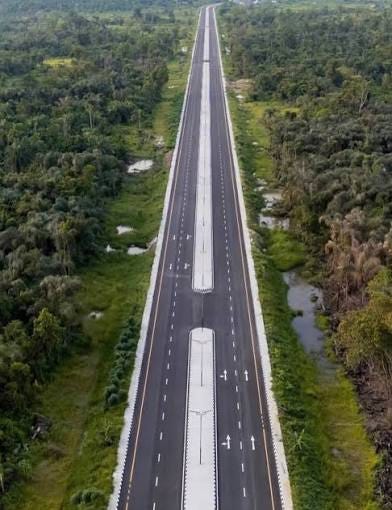
The mechanics of the problem are a collision between two transport systems. A road bridge is designed for vehicles. A canal is designed for boats. When the bridge clearance is measured against the canal’s normal water level rather than its flood level, the boats lose. The residents who depend on canoes for fishing and transport now face a barrier that the road users do not see.
This echoes the broader tension in the Niger Delta between road construction and waterway access, where infrastructure built for one mode of transport can disable another. It also mirrors the longer pattern of oil-company canals being repurposed without a clear maintenance and access regime.
The winners are the road users who now have a faster route to the capital, and the contractor who built the bridge. The losers are the boat operators and fishermen whose route is blocked for part of the year, and the communities that depend on the canal for their livelihoods.
Bottom Line: A bridge that blocks a boat is not infrastructure. It is a trade-off that nobody negotiated.