


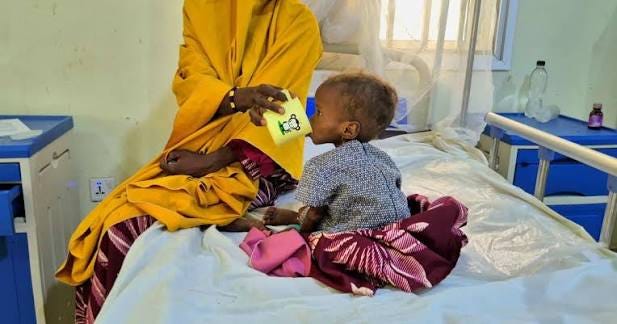
An estimated 2.3 million children under five in Borno, Adamawa and Yobe will suffer acute malnutrition in 2027, according to projections presented at the October Northeast Nigeria Nutrition Sector Coordination Meeting. Of that number, 977,000 will face severe acute malnutrition, up from 918,000 in 2026. The region’s nutrition response faces a $36.8 million funding shortfall. The figures were published by Action Against Hunger, the Nutrition Cluster and UNICEF.
The mechanics of the projection are a study in how humanitarian numbers work. The overall caseload is expected to fall 9% from 2.6 million in 2026, which sounds like progress. But the severe cases are rising 3%, and severe acute malnutrition is the category that kills. A smaller total with a larger lethal core is not an improvement. The preliminary Integrated Food Security Phase Classification shows 23 local government areas in Phase 3 or worse between January and April 2027, rising to 37 during the May to August lean season. Phase 3 is serious. Phase 4 is emergency. The drivers are insecurity, displacement, food inflation and poor access to healthcare, all of which have been present for a decade and none of which a nutrition programme can fix on its own.
The voices around the table are not disputing the numbers. UNICEF and Action Against Hunger, which co-lead the nutrition sector, have both warned that the funding position is the binding constraint. The meeting noted that the rise in severe cases points to a continuing burden on services, while the funding gap adds to the concern. The organisations also flagged that insecurity, below-average rainfall and shrinking donor funding could worsen conditions in Borno and inaccessible areas if support is withdrawn too early. The neutral assessment, from the IPC itself, is that the 2027 projections remain preliminary pending validation by the global support unit.
This echoes the 2022 and 2024 malnutrition emergencies, each of which produced a funding appeal, a projection and a partial response. It also mirrors the longer pattern of humanitarian financing arriving after the lean season has begun, when the cost of treatment is higher and the number of children in need has already grown.
The winners are the agencies that can report a decline in the overall caseload, and the donors who can point to a measurable output. The losers are the 977,000 children whose severe malnutrition will require therapeutic feeding that the $36.8 million gap may not cover, and the mothers who will walk further to find a clinic that has the supplies.
Bottom Line: A 9% decline in the caseload is not a success if the children most likely to die are a larger share of it.