


A ₦20.25 million education programme targeting 750 pupils has commenced in 14 public schools across Lagos State. The Catch Them Young Entrepreneurship Education Foundation announced the pilot at its official launch in Ikeja on Friday. The programme covers schools in Ikeja, Eti-Osa and Ajeromi-Ifelodun local government areas. It will provide 1,500 textbooks and workbooks on pre-vocational studies and digital literacy.
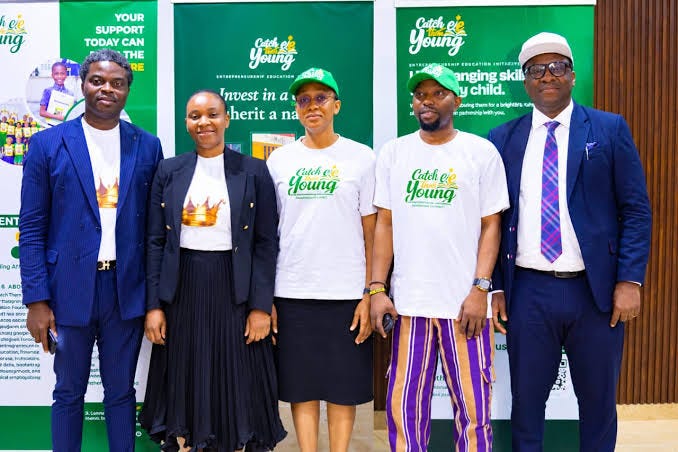
The foundation said the ₦20.25 million represents the combined value of learning materials, digital resources and teacher training. The project is being implemented under the supervision of the Lagos State Universal Basic Education Board. It is the first stage of a broader plan to equip 10 million children in Nigeria and other African countries with entrepreneurship, vocational and digital skills by 2040.
Programme Coordinator Unachukwu Nkolika said the intervention complements Nigeria’s revised basic education curriculum. The curriculum, introduced from the 2025/2026 academic session, added digital and pre-vocational learning at the basic education level. Nkolika said a curriculum on paper does not change a child’s life. It needs books, tools and confident teachers. The foundation has secured approval to extend the programme to 10 primary schools in Anambra State.
This mirrors the 2019 launch of the revised basic education curriculum, which promised practical skills but struggled with implementation. It also echoes the 2021 TETFund research grants, which funded projects but rarely produced commercial products. The difference now is the focus on basic education and teacher training. The winners are the 750 pupils who gain materials; the teachers who gain training; and the foundation, which shows delivery. The losers are pupils in schools outside the pilot; and the education system, if the pilot remains small and unfunded at scale.
Winners: The 750 pupils; trained teachers; the foundation. Losers: Pupils outside the pilot; the education system if the pilot does not scale.
Bottom Line: ₦20.25 million for 750 pupils is a start. Nigeria needs a system that reaches millions, not a pilot that reaches hundreds.